Ivar Scooter
An object designed for rest becomes a tool for movement.
Brief
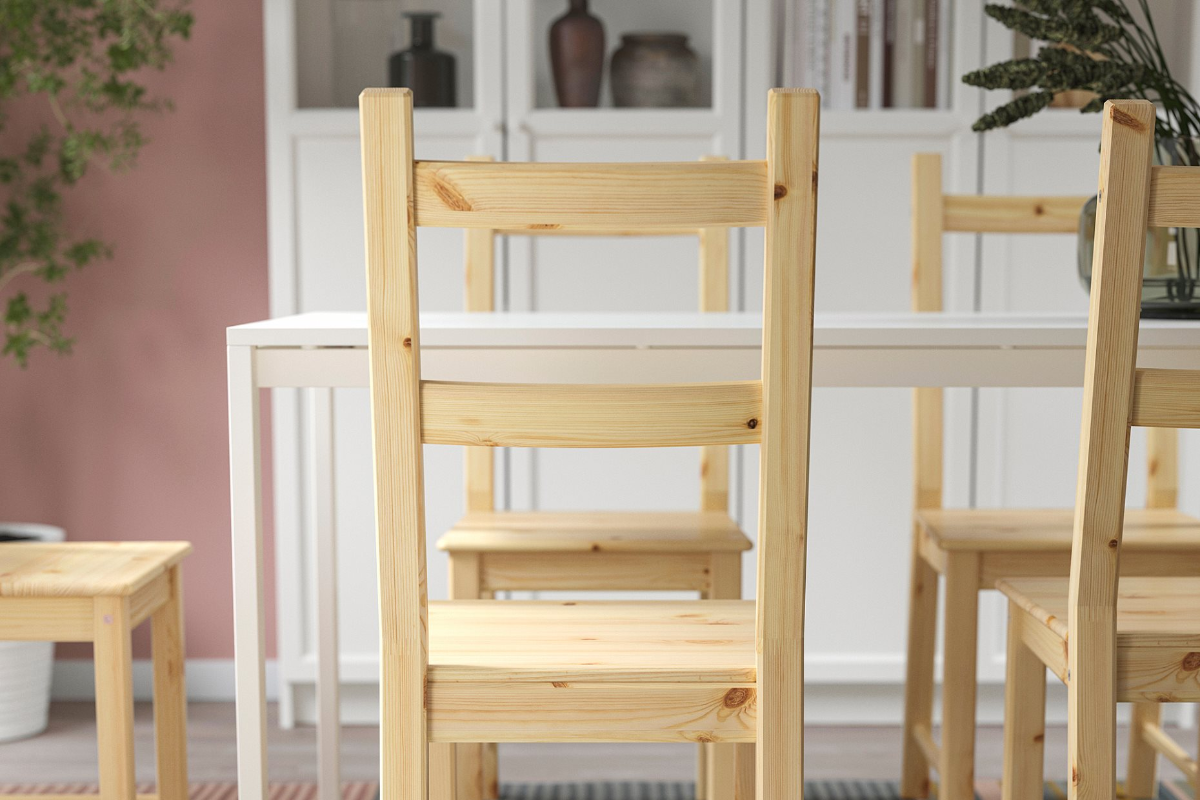
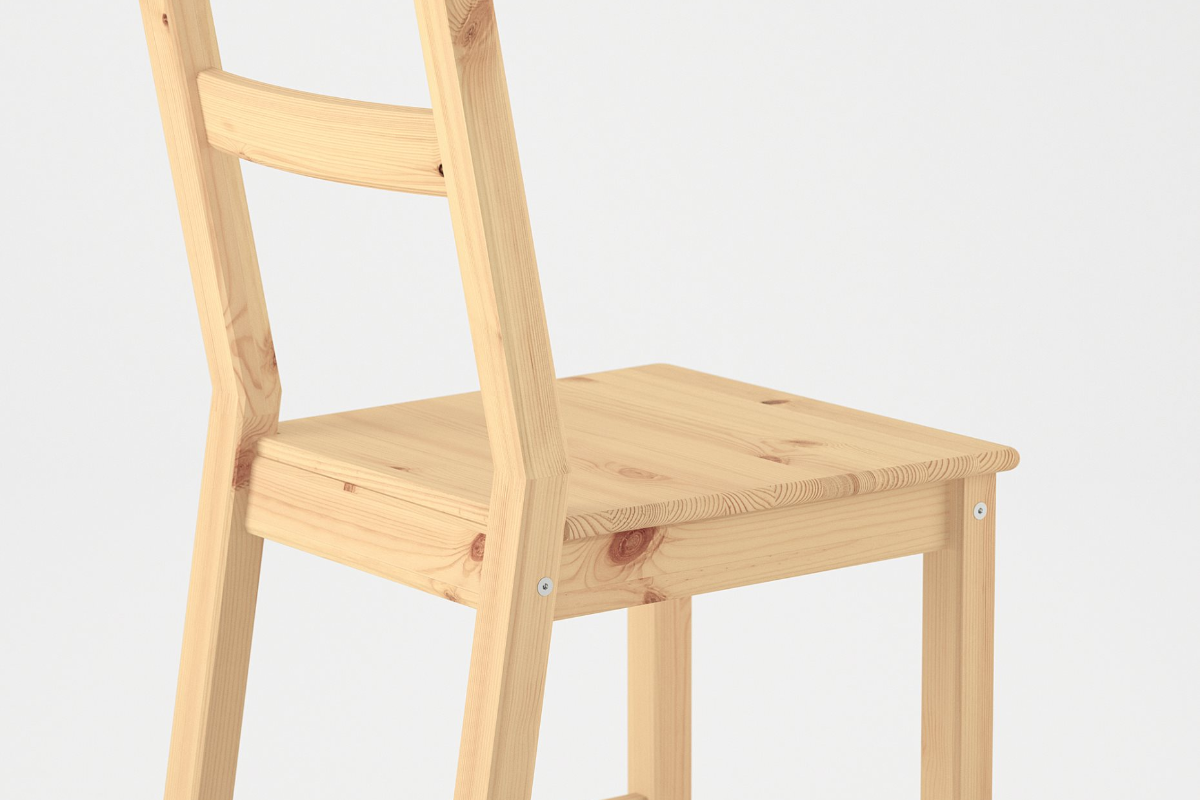
The project begins with the analysis of the IKEA Ivar Chair, focusing on its structure, function, and meaning. The chair represents stability, rest, and permanence in a single place. The challenge was to transform this object by exploring its conceptual opposite — to design a product that rejects sitting and instead promotes movement and interaction with space.
Concept
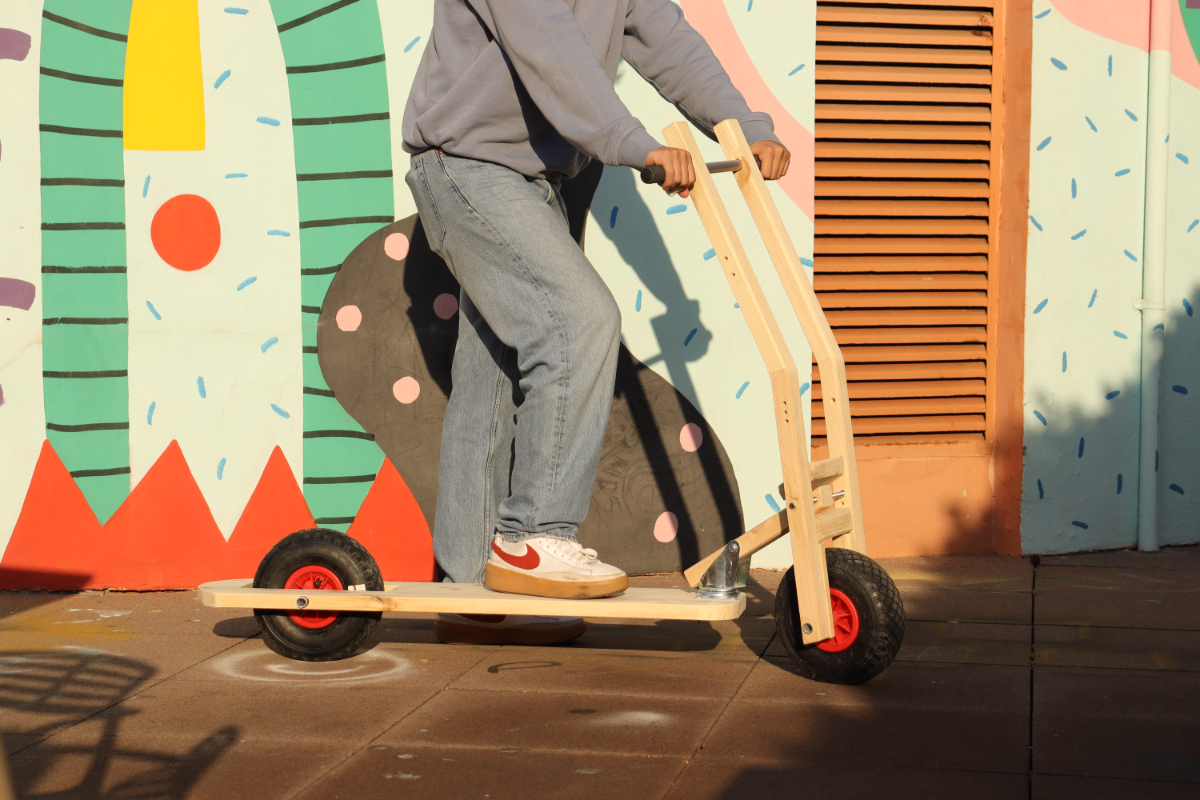
The proposal inverts the logic of the chair. Instead of supporting the body in a static position, the new object requires the user to stand and move. The design shifts from stillness to motion, from permanence to transition. The scooter emerges as a response, transforming a symbol of rest into an object defined by mobility.
Creative Process
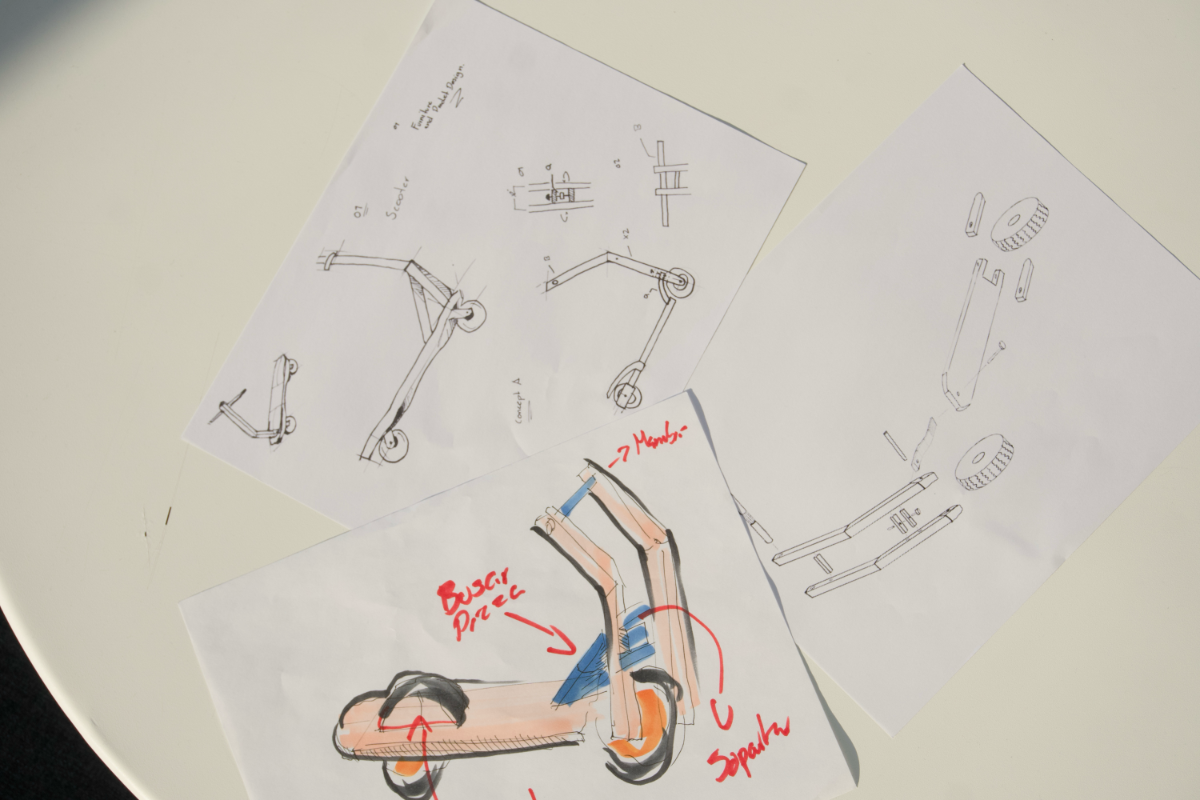
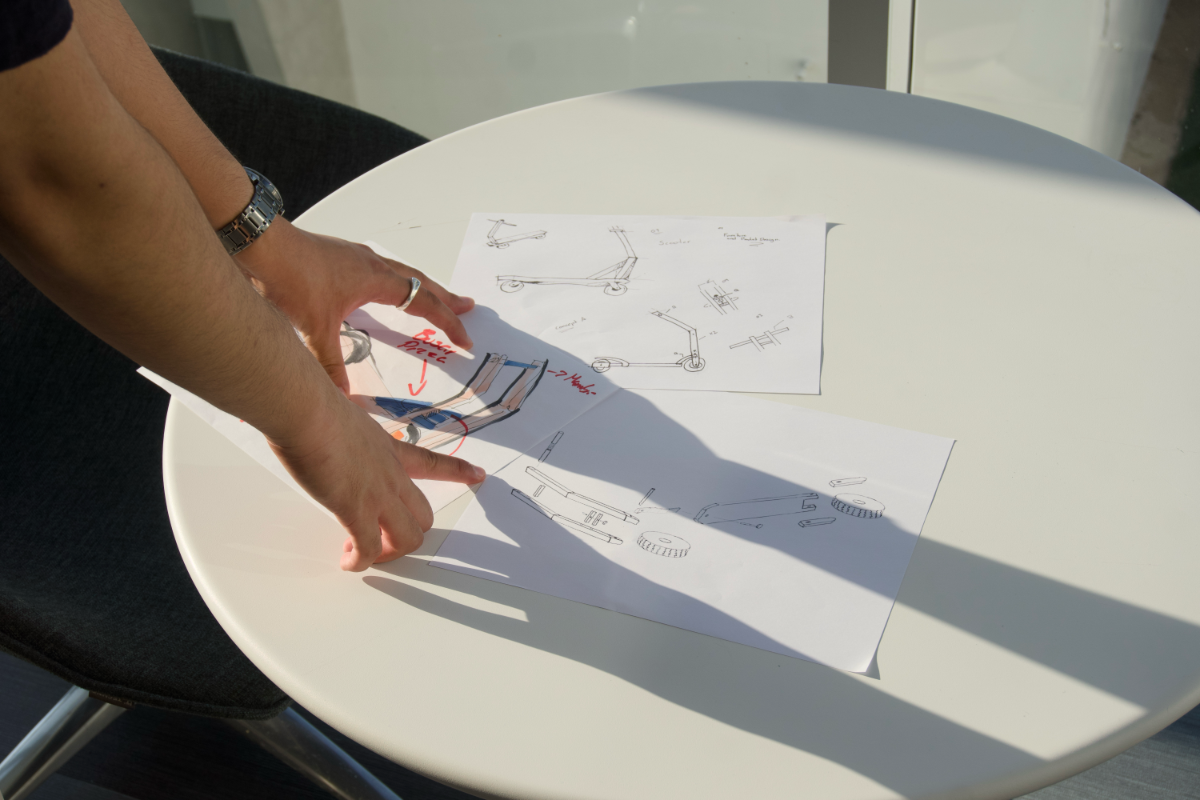
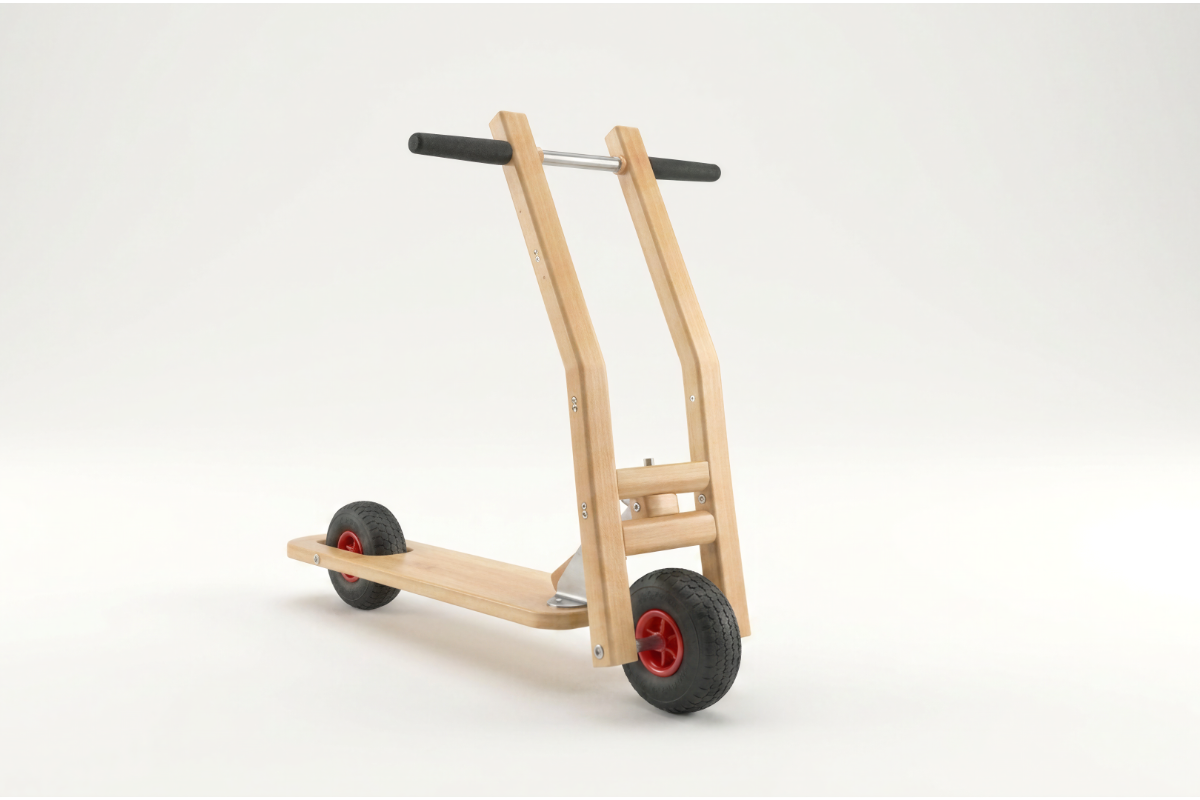
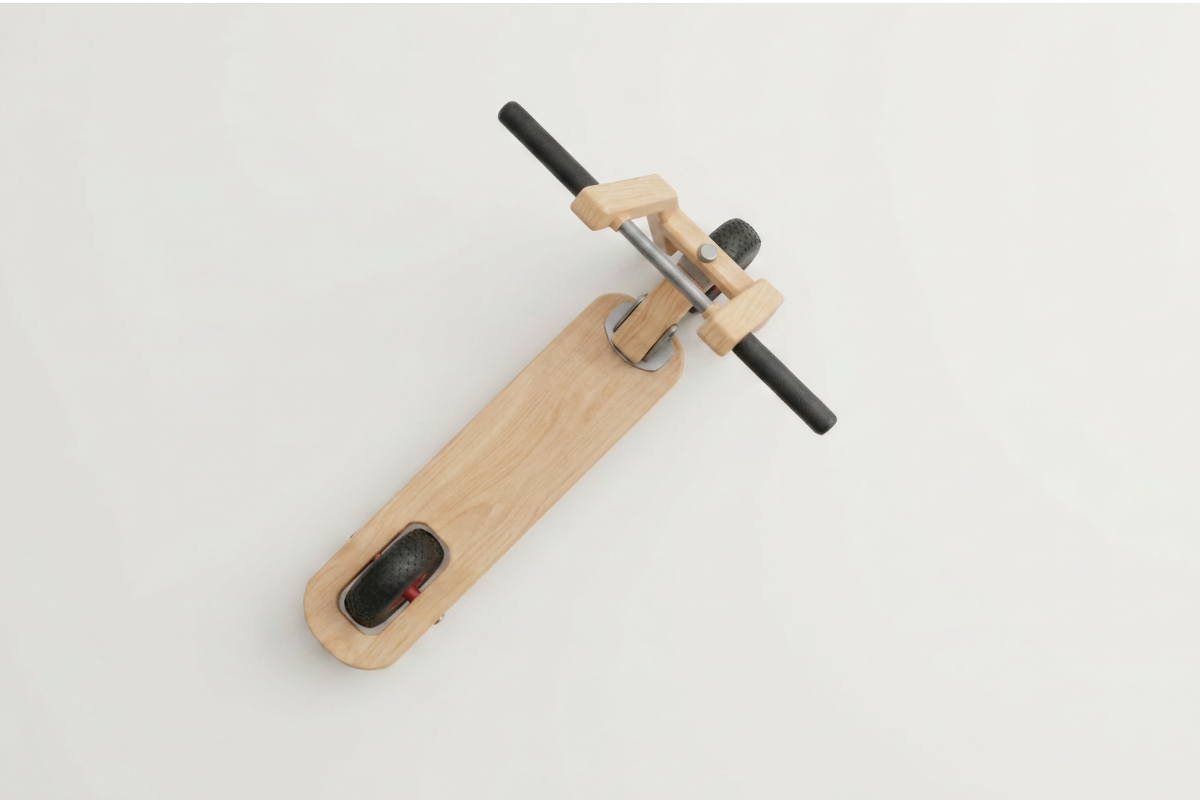
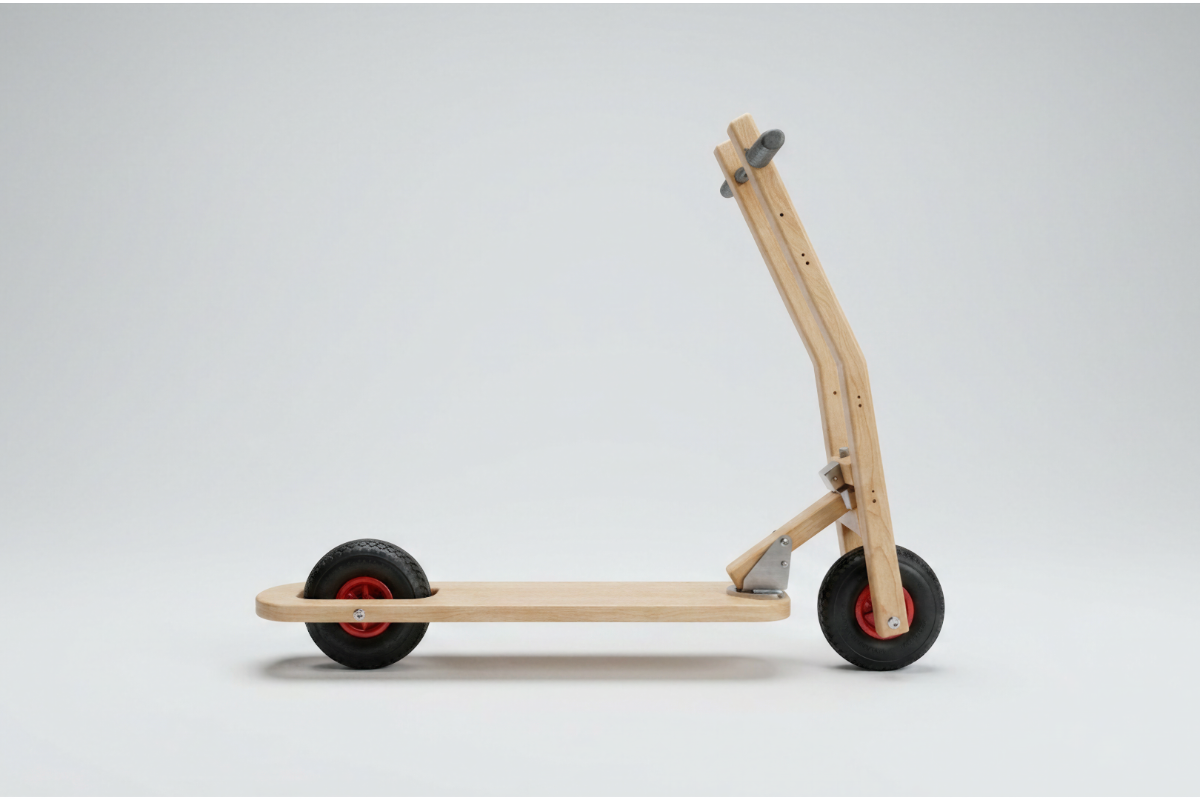
Initial sketches explored the transition from a static object to a dynamic form, focusing on balance and movement. The design process moved from identifying the most representative shape of the chair — its distinctive wooden slat structure — to translating that language into a continuous, lightweight scooter frame. A folding mechanism was integrated to enhance portability without compromising stability. Key components such as the deck, wheels, and handlebars were simplified to emphasize clarity and purpose.
Mock Up
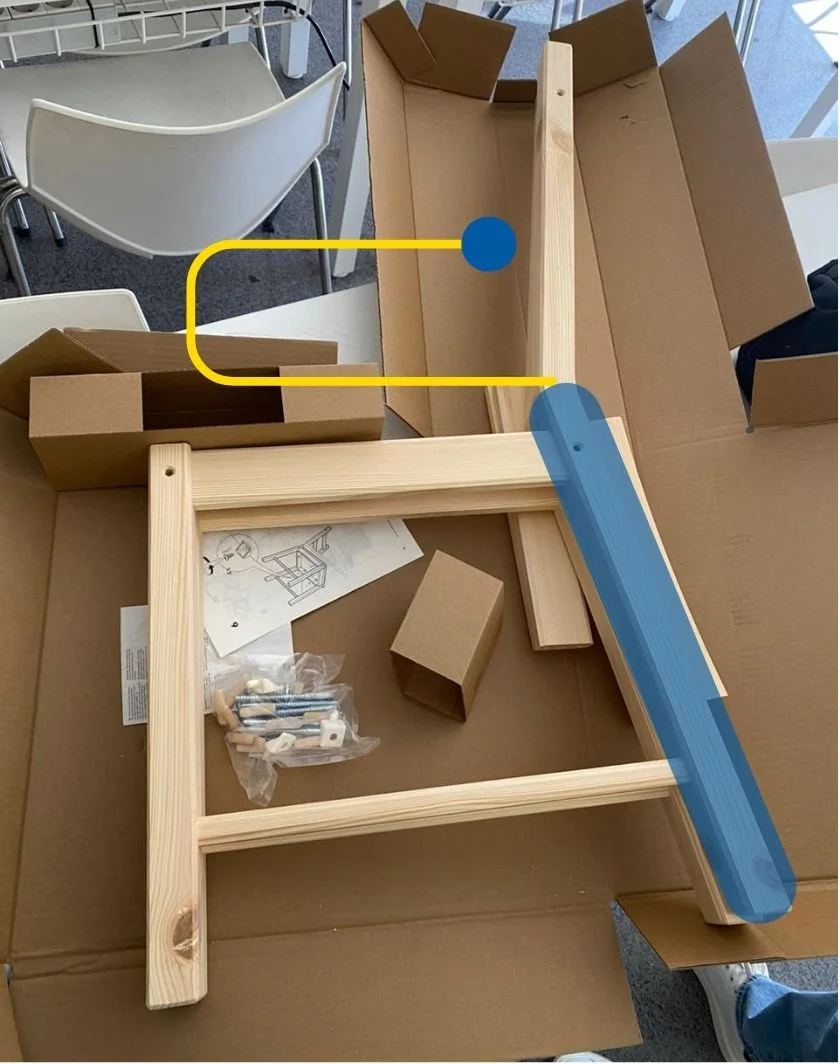
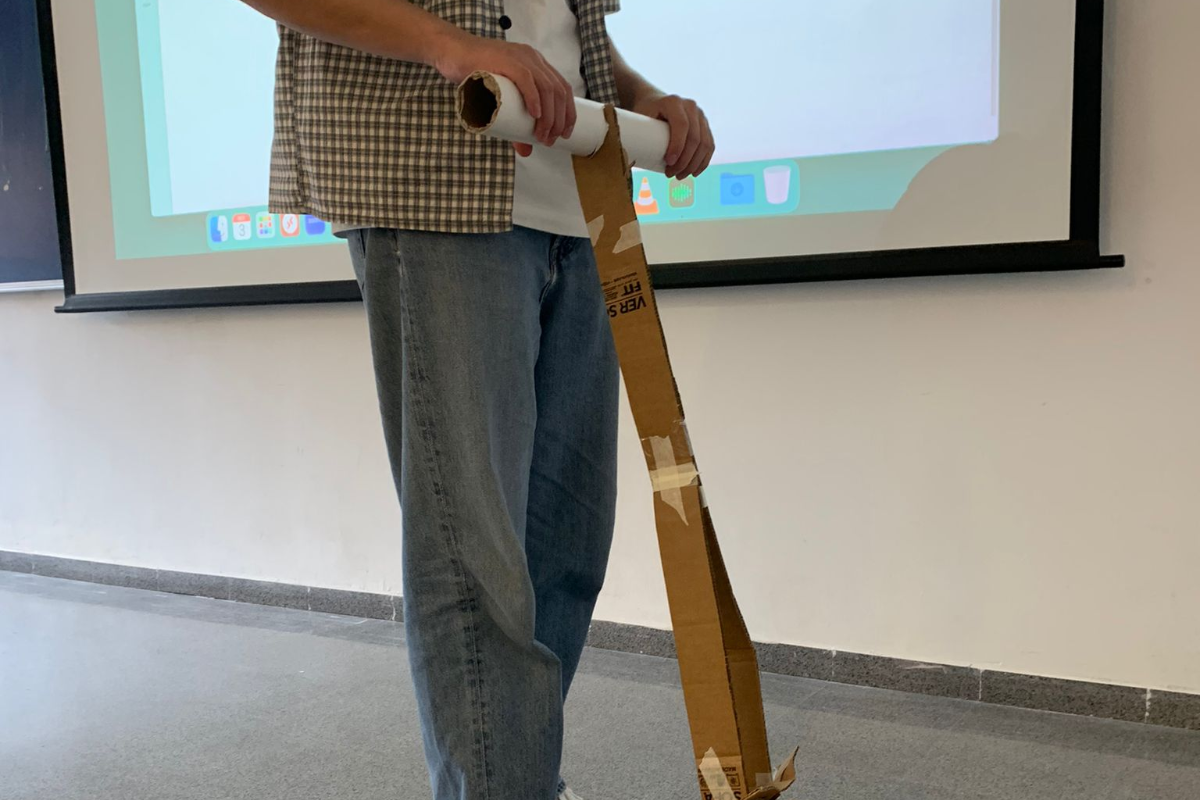
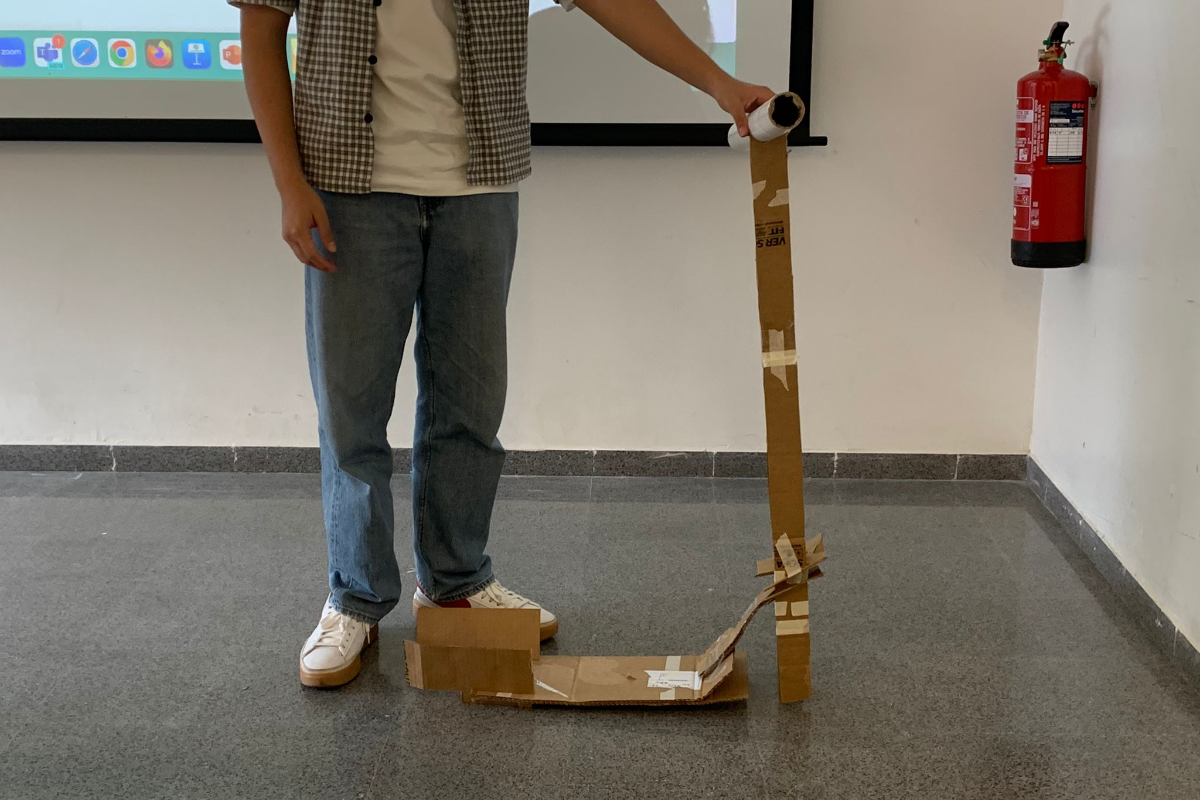
Scale mock-ups were built to test the structural proportions and validate the folding mechanism before moving to fabrication. The cardboard models allowed for rapid iteration of the frame geometry and confirmed the relationship between the original chair's wood-slat language and the new scooter structure.
Fabrication Process
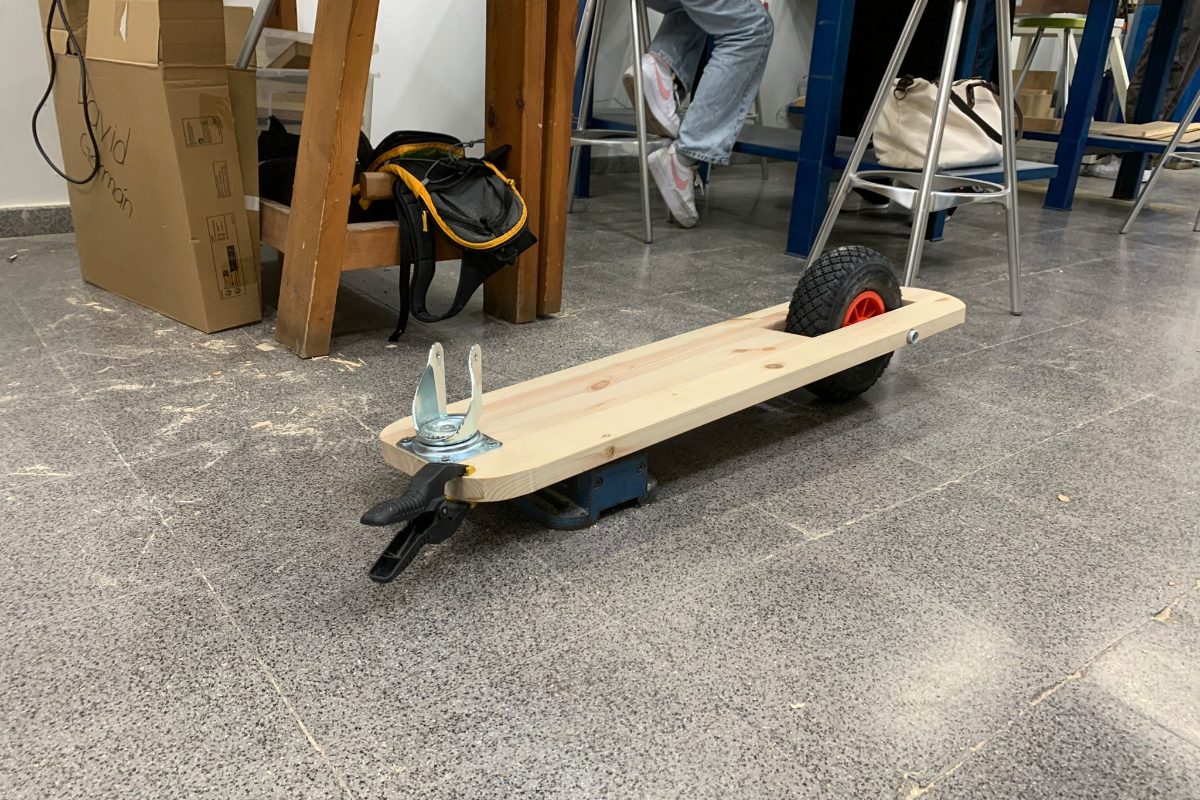
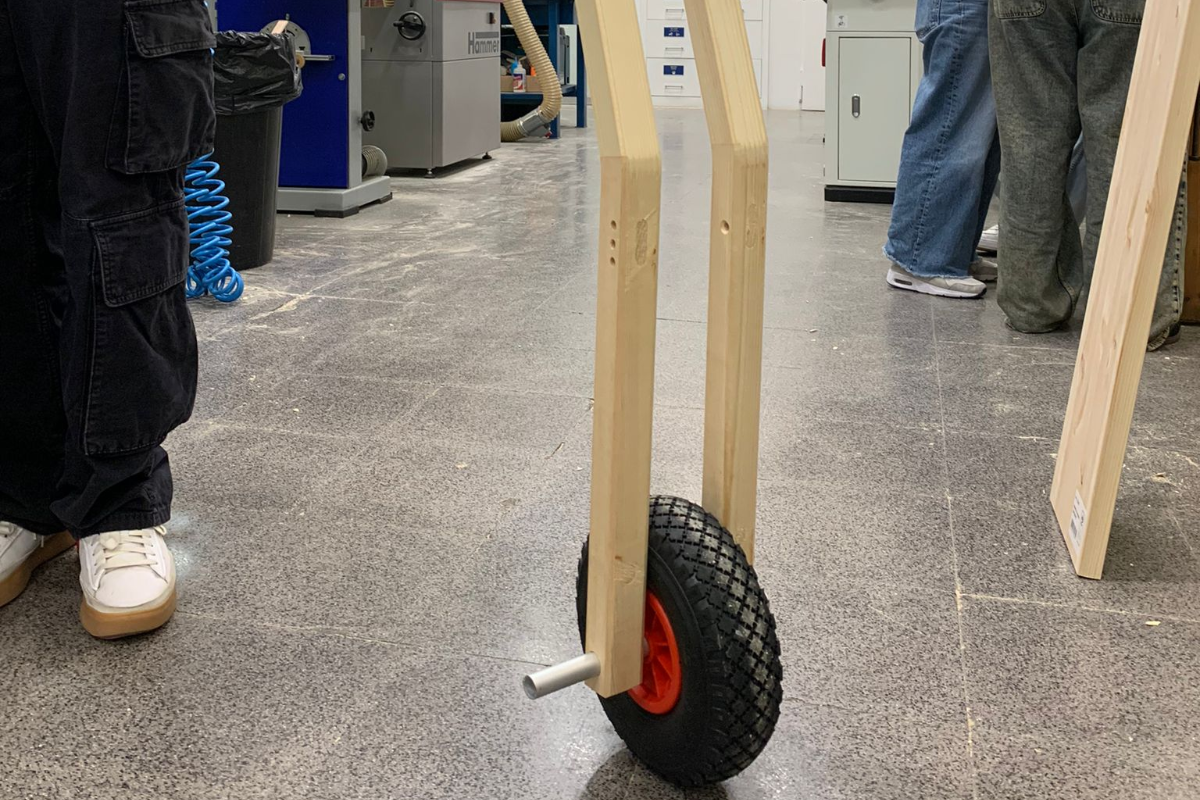
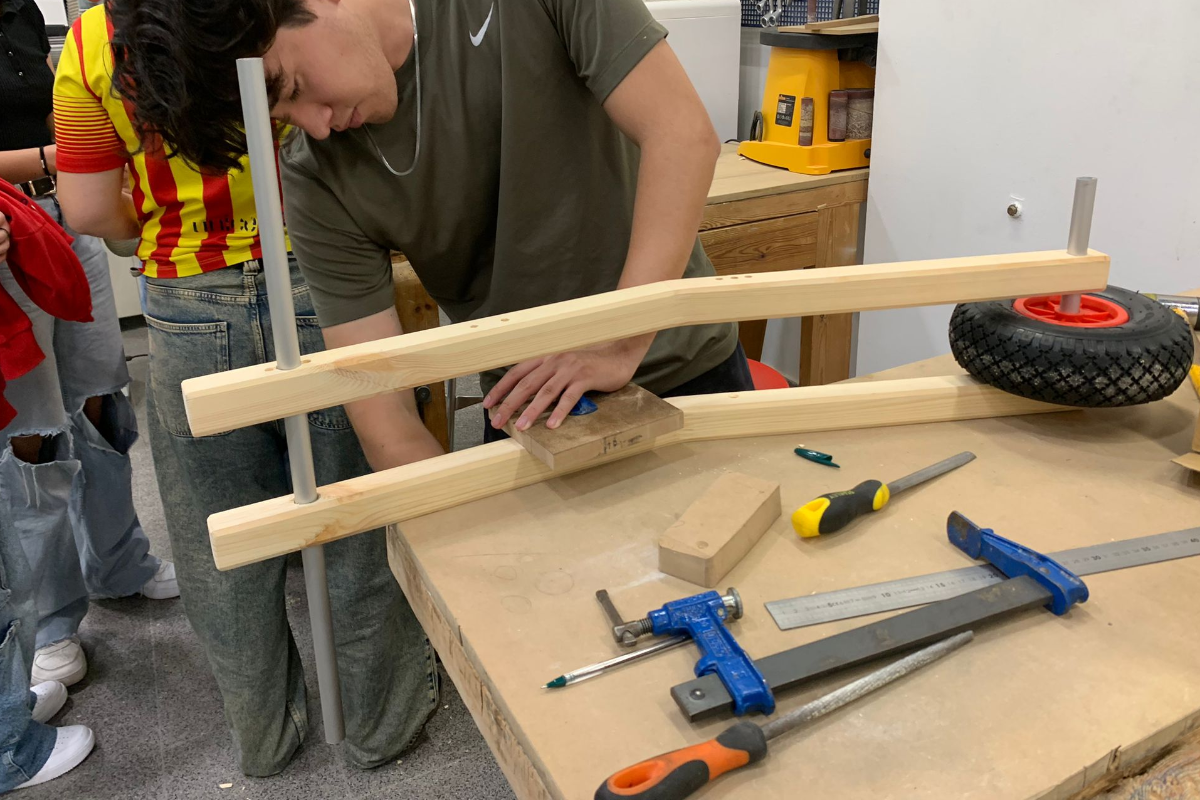
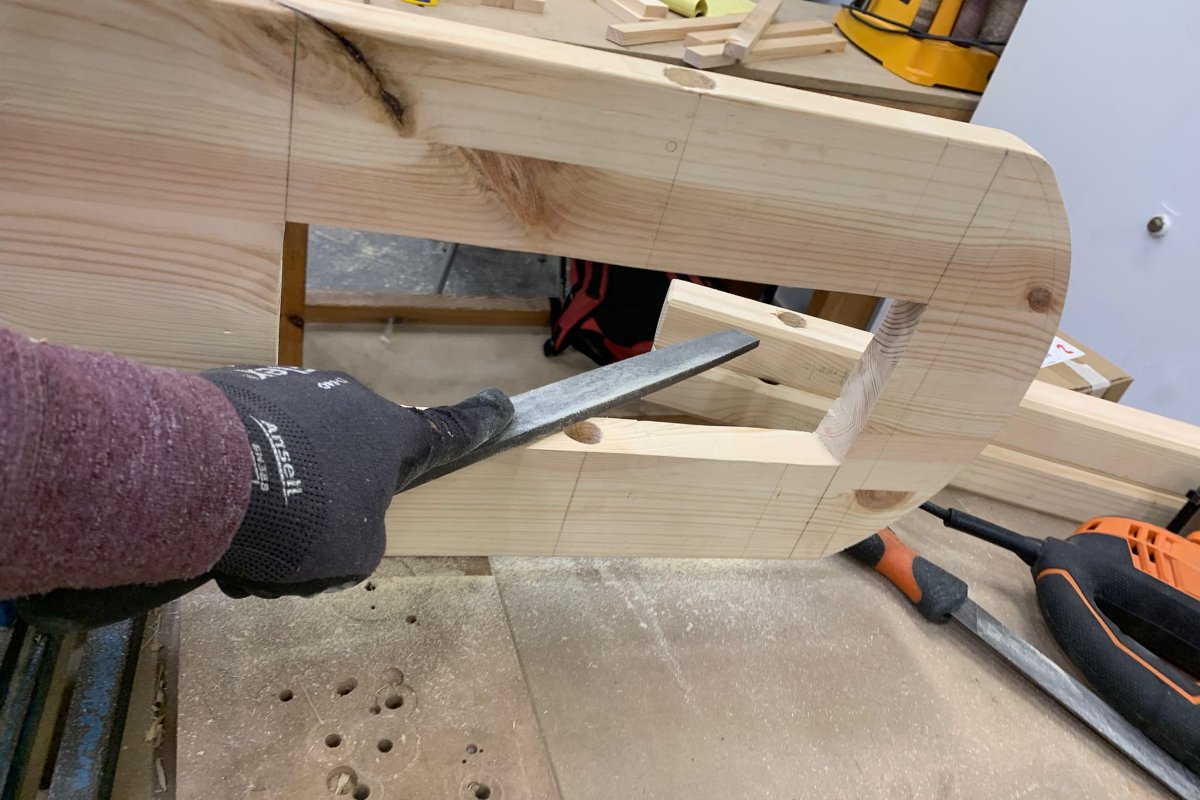
The construction reinterprets the chair's original logic through cutting and reassembly. Wooden elements were adapted to create a lightweight and stable structure. The process involved precise cuts, structural assembly, and the integration of mobility components — wheels, axles, handlebars — while maintaining a clear visual reference to the original object's material and joinery language.
Final Product Visualization
The result is a functional scooter that eliminates the possibility of sitting and encourages continuous movement. The project redefines the original object by shifting its purpose and user interaction — standing as an exploration of how design can transform meaning through function.
Specs
| Reference | IKEA Ivar Chair |
| Material | Pine wood · Steel axles · Rubber wheels |
| Process | Hand cutting · Structural assembly |
| Prototype | 1:1 functional mock-up · Cardboard scale model |
| Context | Elisava, Barcelona · 2024 |