Dinat
Supply box and shelter furniture system for disaster relief contexts. Winner — Nomad Challenge 2024.
Brief
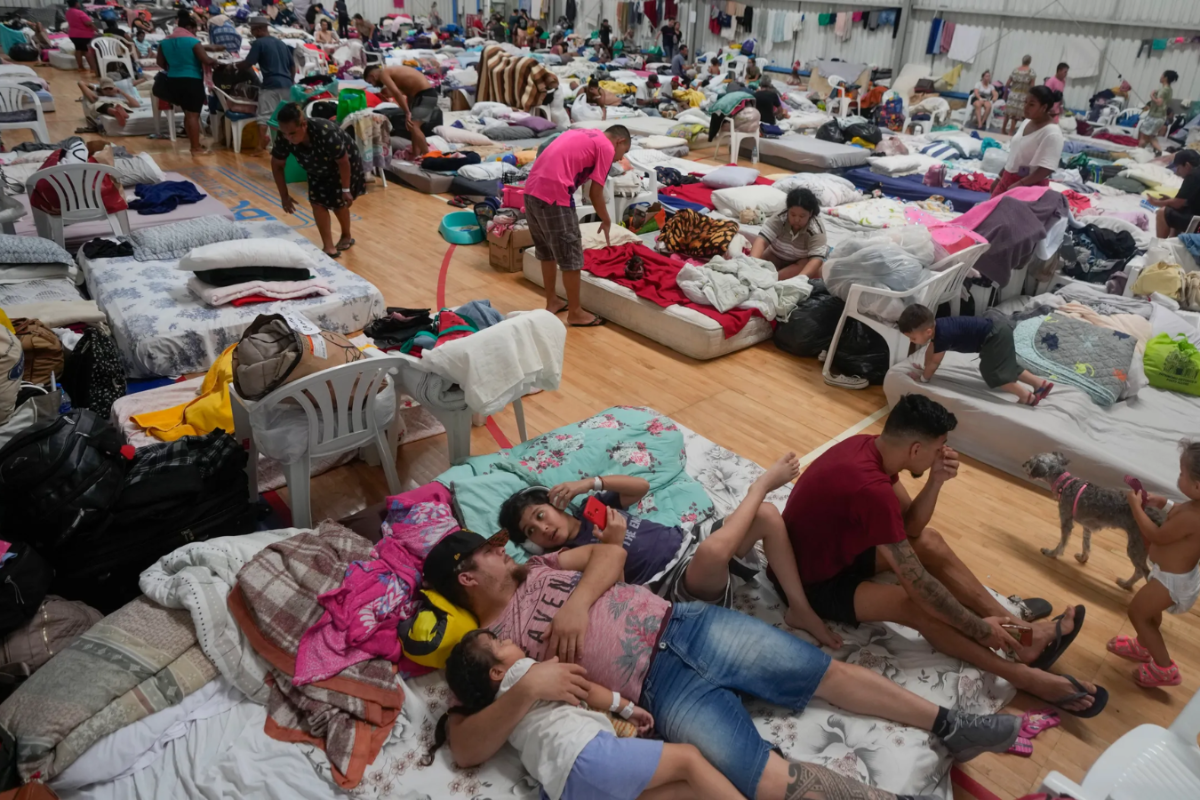
We are designing for individuals who find themselves temporarily displaced due to natural disasters or those who must adapt quickly to changing environments. The concept of being nomadic is present in people in a temporal shelter who require solutions that provide practical, immediate comfort and organization amidst unpredictability.
The Idea
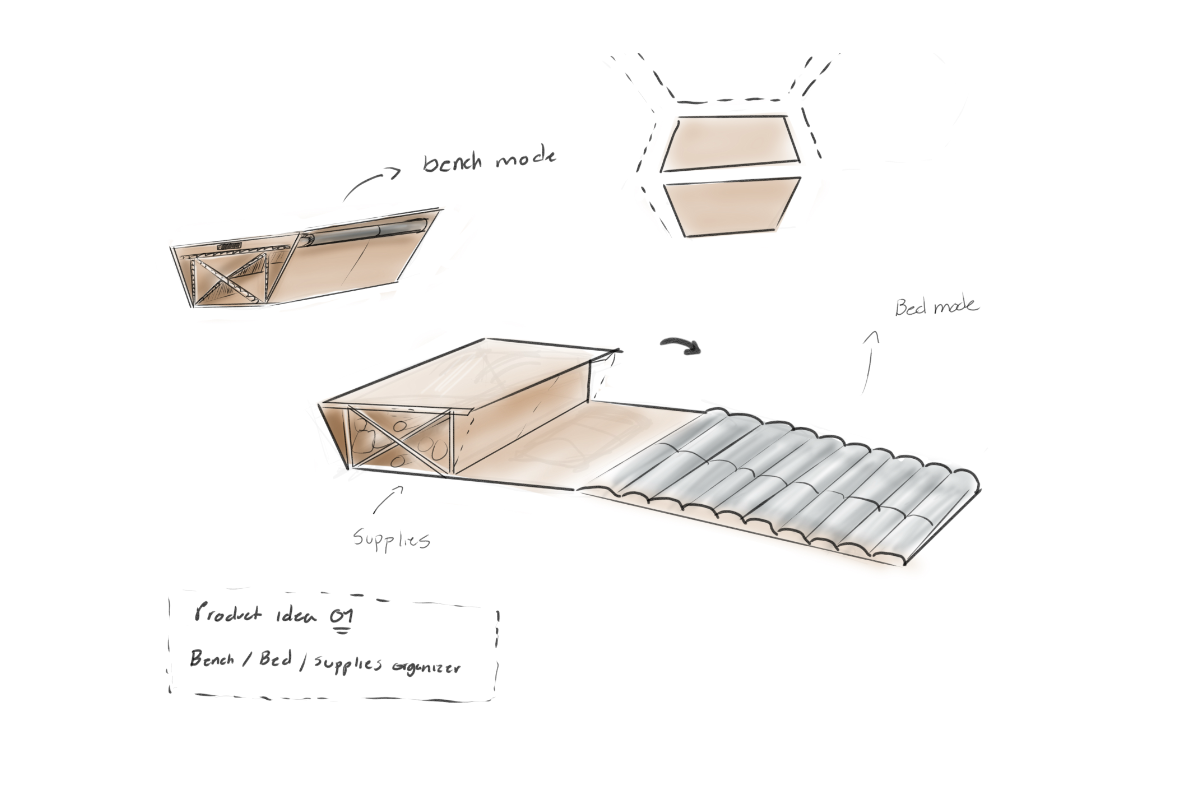
We iterated extensively on our concept, starting with the idea of a first aid kit for people in shelters with a foldable bed incorporated. Once the supplies were used, that space would become storage for personal belongings. After feedback questioning originality and asking what people in a shelter actually need — and how it would feel to sleep on a cardboard bed after losing everything — we pushed further toward something more meaningful.
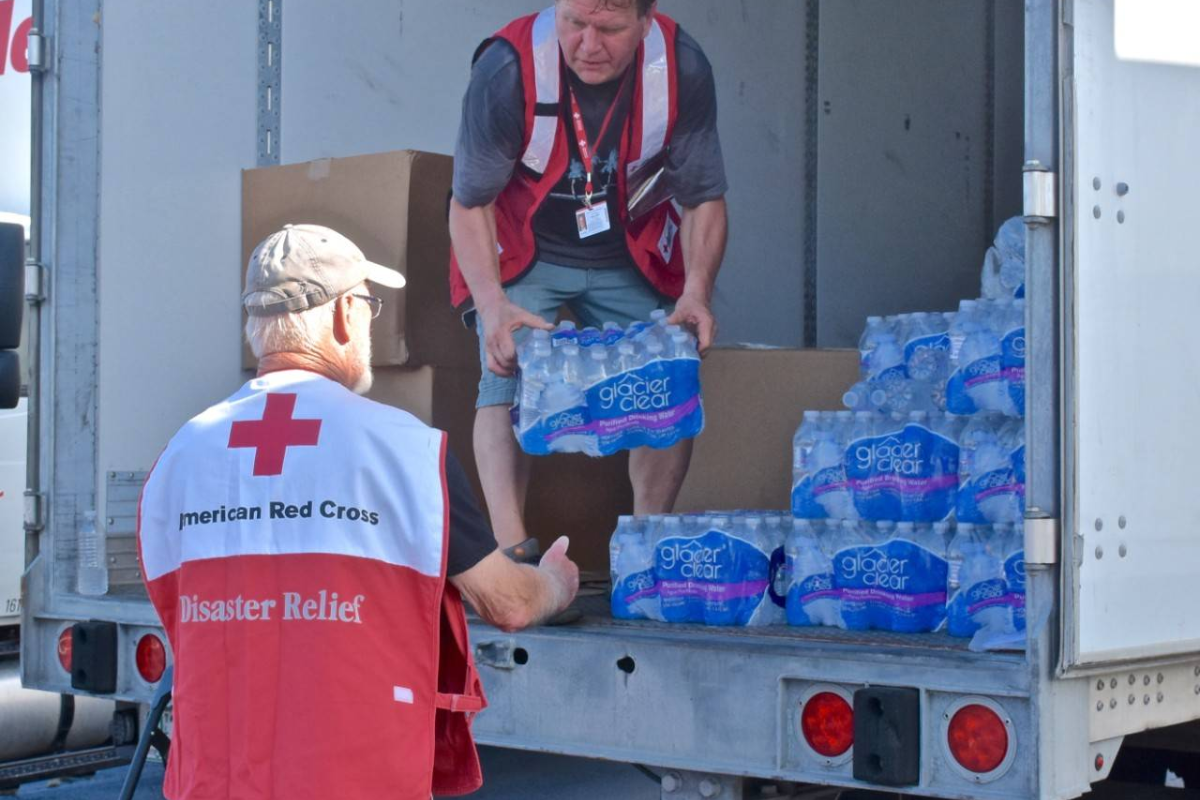
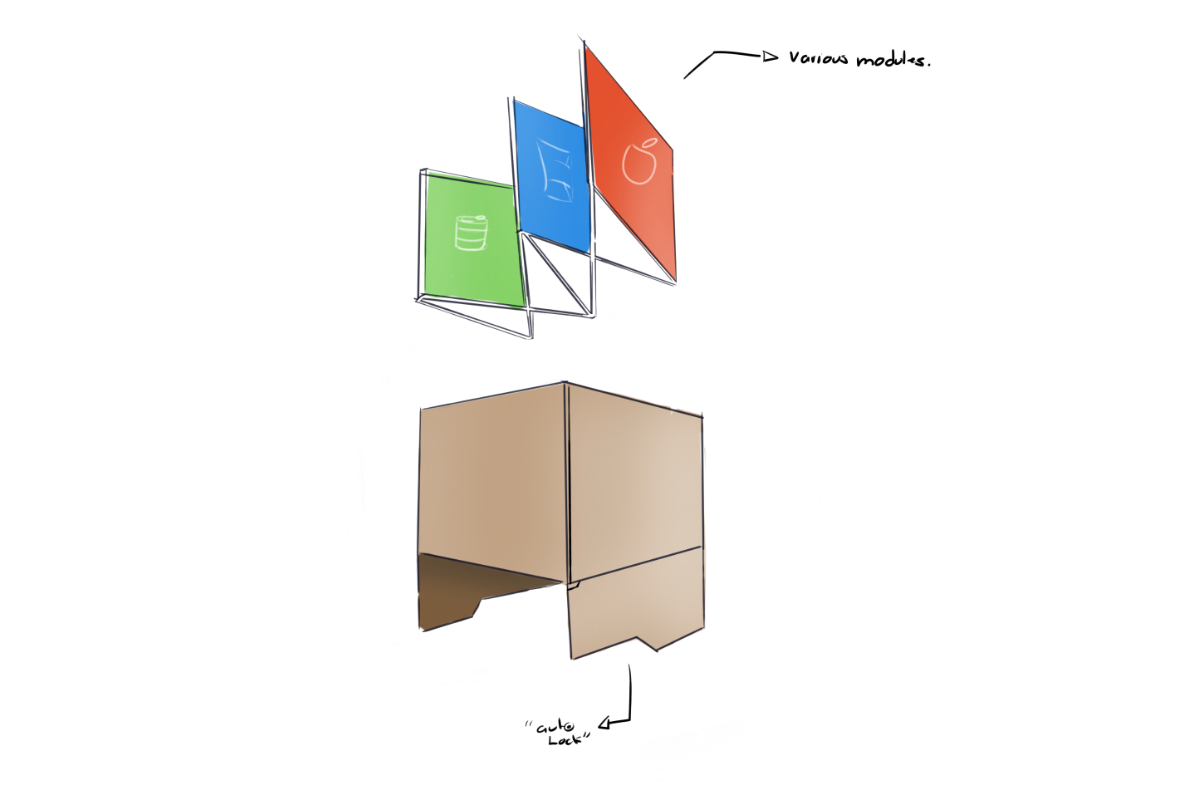
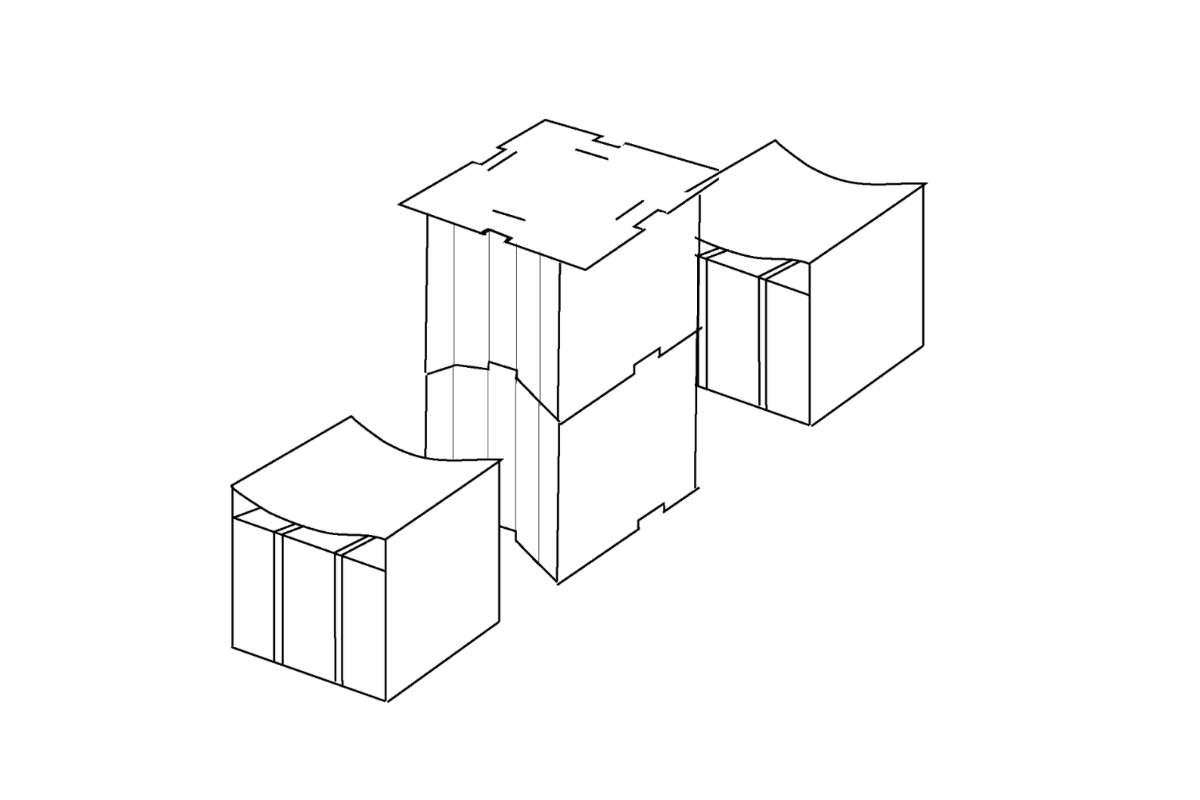
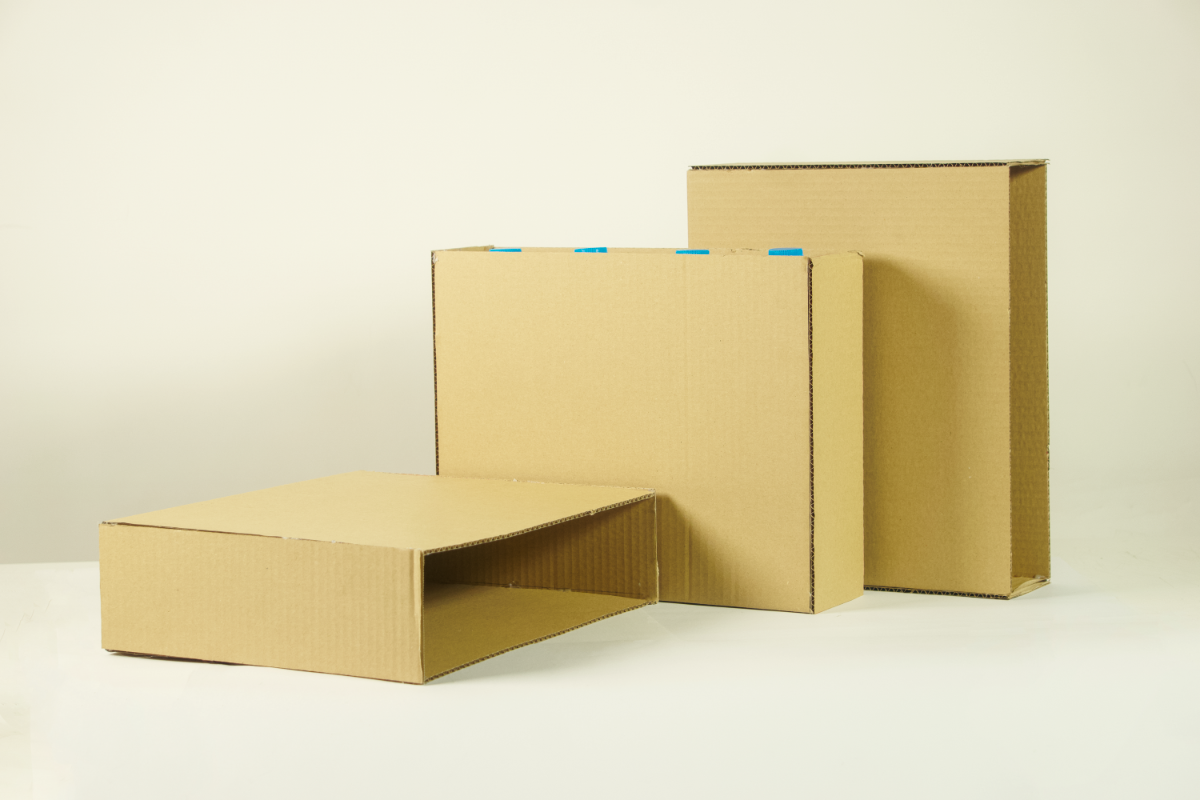
While observing supply packing for those in shelters after the Valencia floods, we noticed the process was disorganized. Research confirmed that people feel lost and alone after extreme events. This led to a new idea: a telescopic box where the top functions as a low table after use, and the bottom doubles as a stool. The real strength of the concept is that two tables stacked together form a full-height surface — encouraging people to sit across from each other, which research shows significantly helps those recovering from trauma.
Creative Process
Iterative testing revealed that early prototypes fell short of our ergonomic and viability standards. A focus on stability and simplified assembly became the catalyst for refining the product, ensuring it was not only sturdy but also intuitive for the end user.
The Top Box / Table
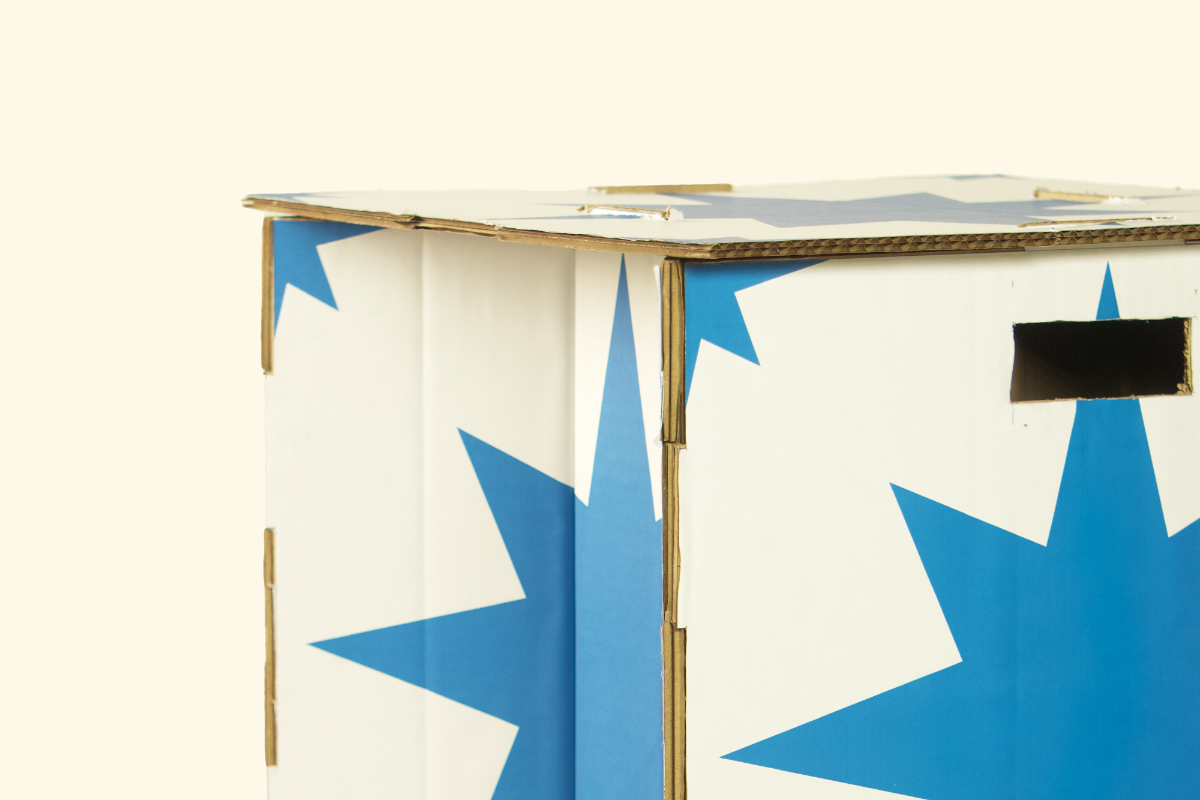
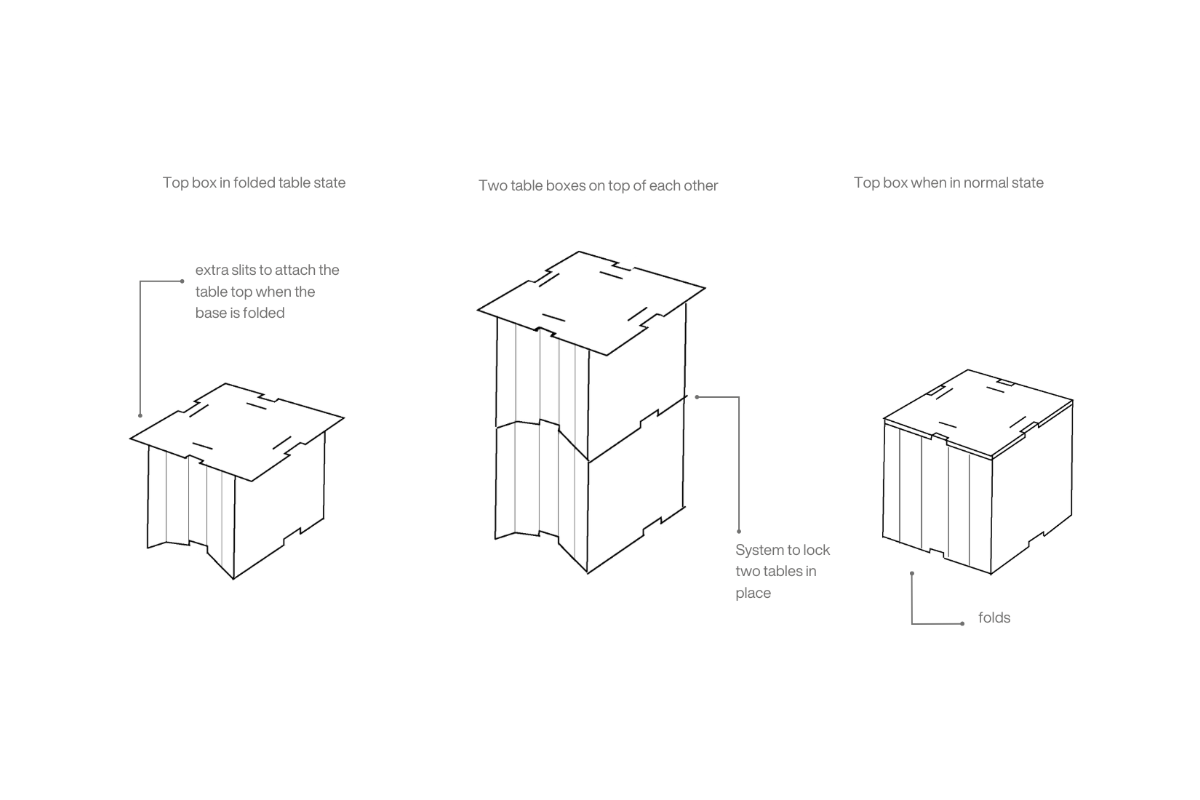
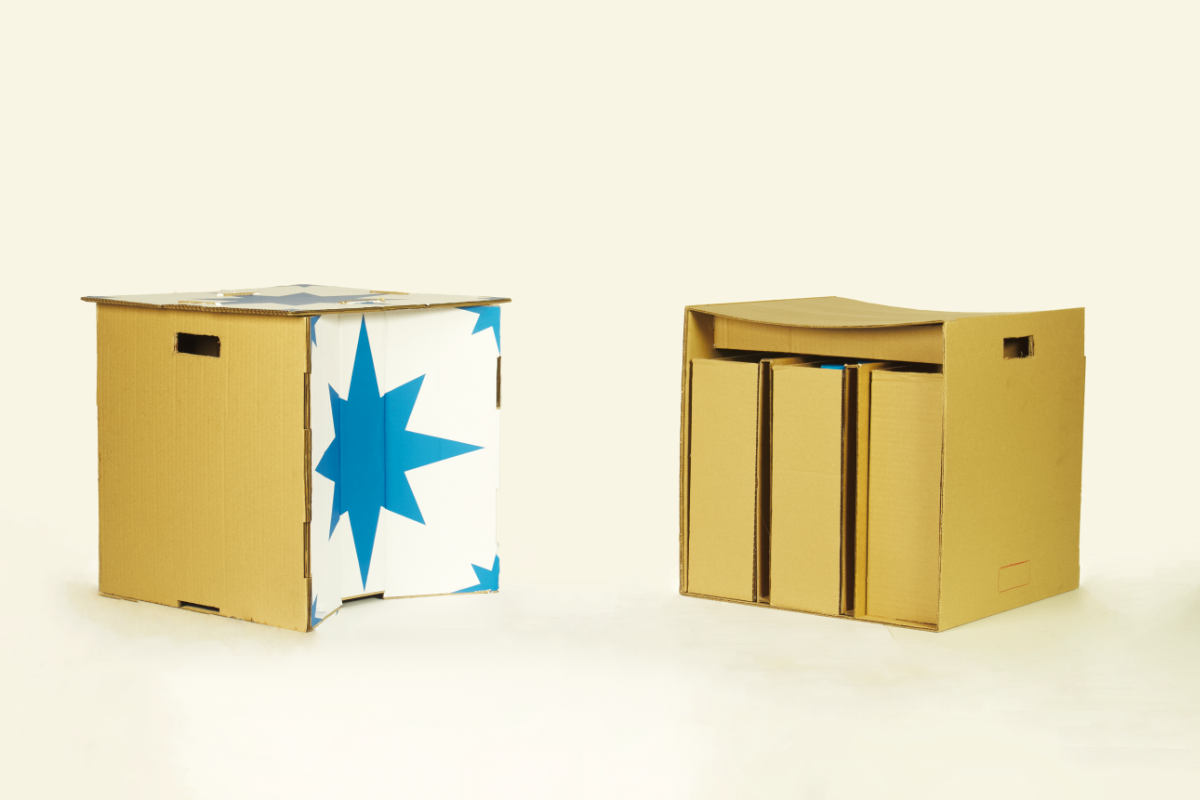
To strengthen the table and provide room for legs, the side parts bend in an arch similar to the stool, creating a stable and comfortable surface. To make the tables stackable, a click system was developed: the bottom edge has a one centimeter gap and the top edge has a matching elevation, locking both tables in place when stacked together.
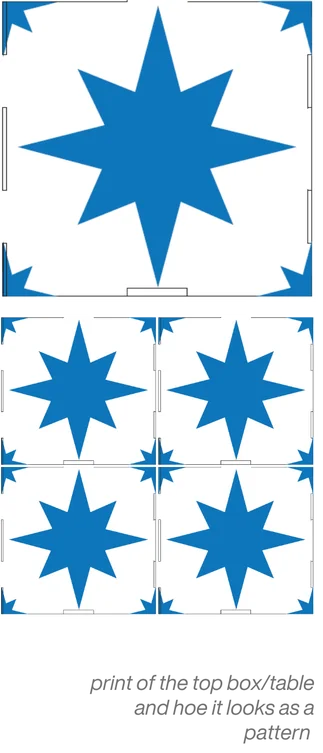
The tabletop includes engraved holes that can be pressed through once the supply function is complete, allowing the top to be reattached as a table surface. The print was designed to feel homey and give hope to those who lost everything. We landed on a tile pattern with stars — a symbol of guidance — rendered in blue for its calming effect. Multiple tiles together create a cohesive print that also serves as a visual incentive to stack the tables and bring people closer.
The Bottom Box / Stool
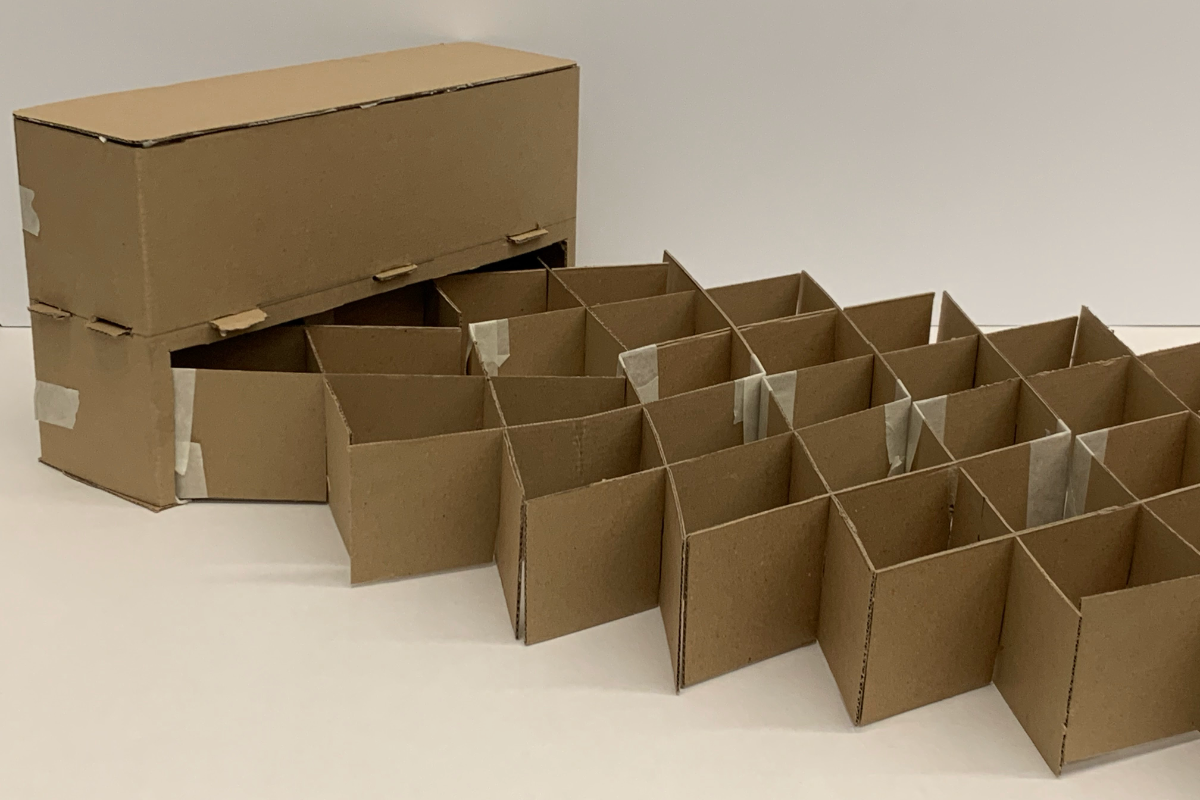
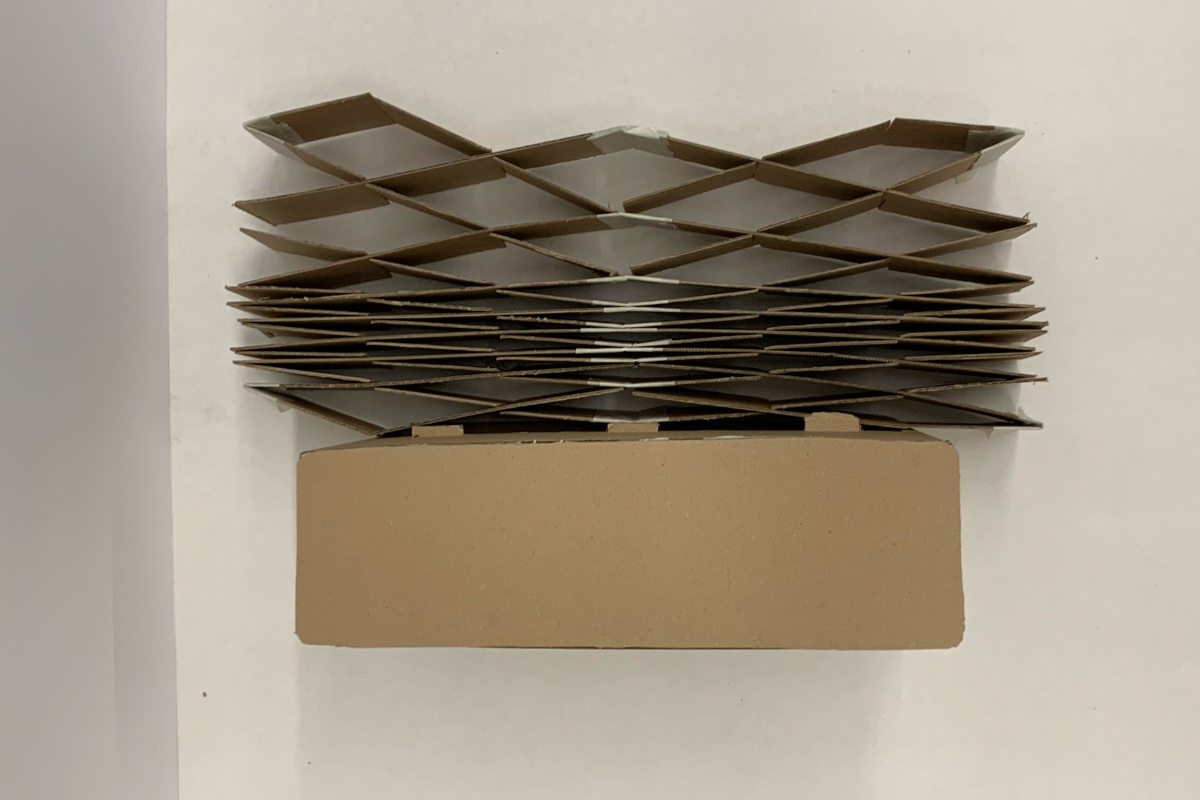
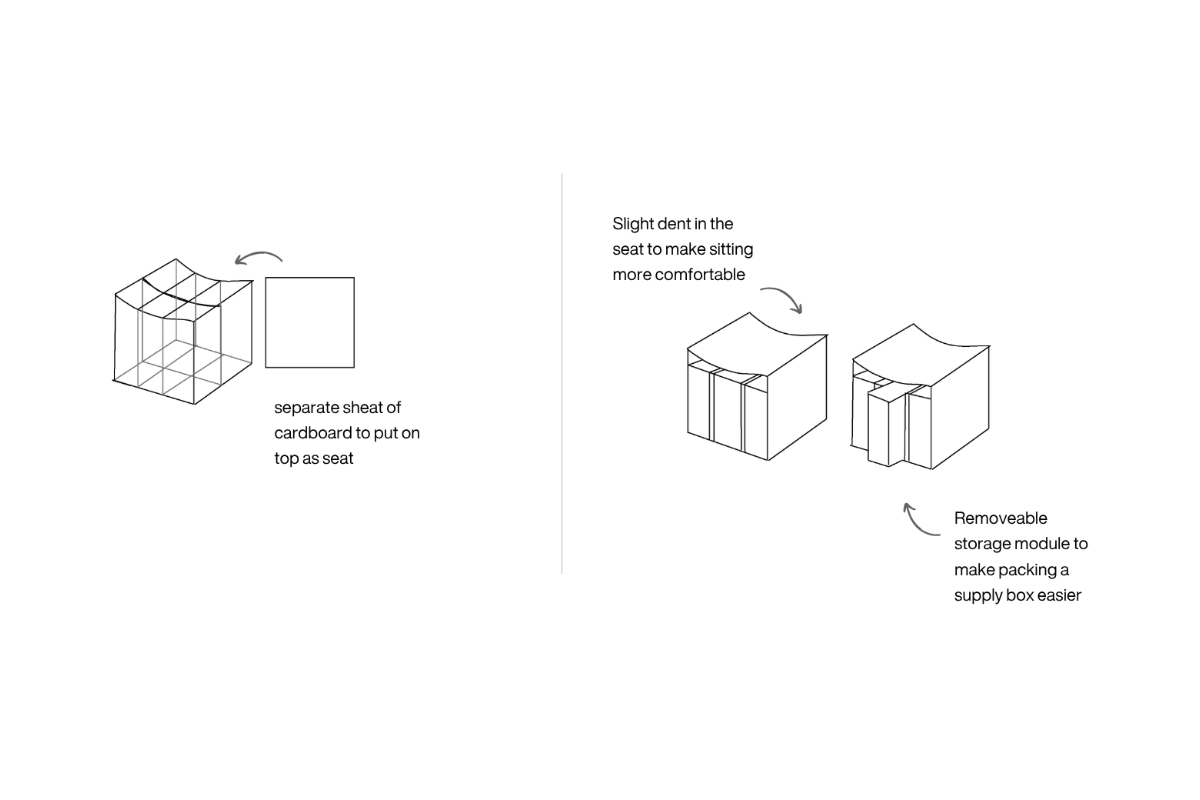
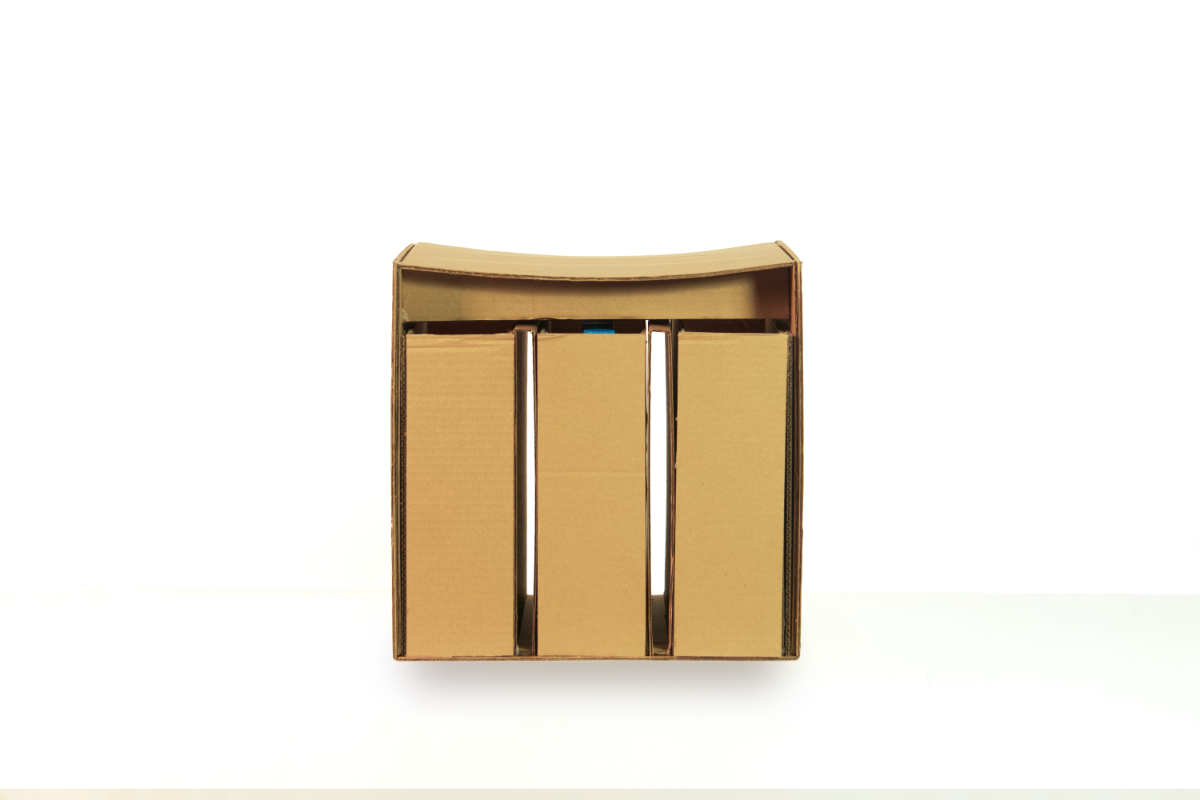
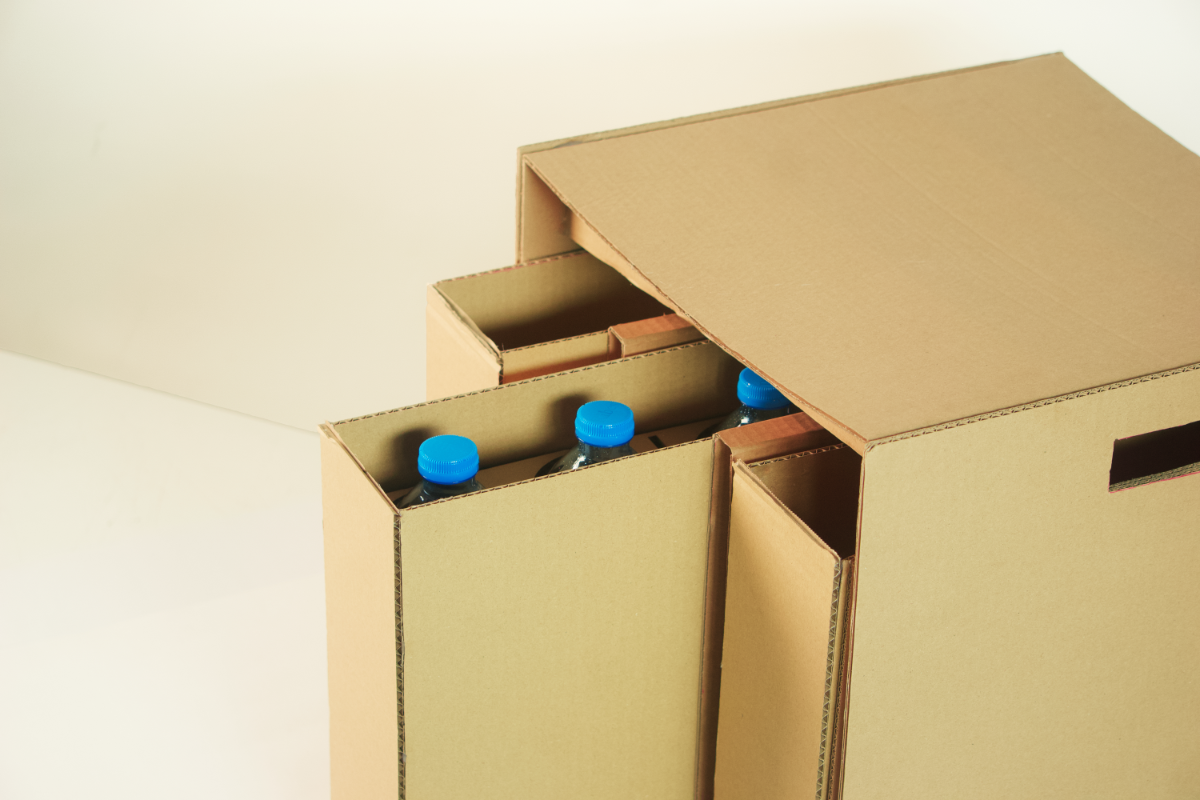
We iterated on how to integrate the stool into the box. An early concept used integrated dividers to bear the seated person's weight, requiring a separate seat panel. The next iteration introduced sliding storage compartments — each module filled independently and inserted into the box, making supply packing faster and more organized. This configuration also allows a person to access their storage while seated on the stool.
Final Design
Ultimately, we arrived at a solution that trades quantity of functions for quality of help. Designed specifically for the challenges of disaster relief, the project evolved into a vital tool for those in temporary shelters. This human-centered approach focuses on the essential: the swift transport of food, documents, and personal items. It serves as a vital bridge between disaster and safety, providing a reliable way to carry what matters most in a fast, organized manner.
Specs
| Award | Winner — Nomad Challenge 2024 |
| Category | Disaster relief · Shelter furniture |
| Material | Recycled cardboard |
| Context | Temporary shelter · Natural disaster response |
| Institution | Elisava · Barcelona, España |
| Team | David Rojas González · Puck Dalenberg |