Trama

Lounge Chair — Andreu World Contest 2026

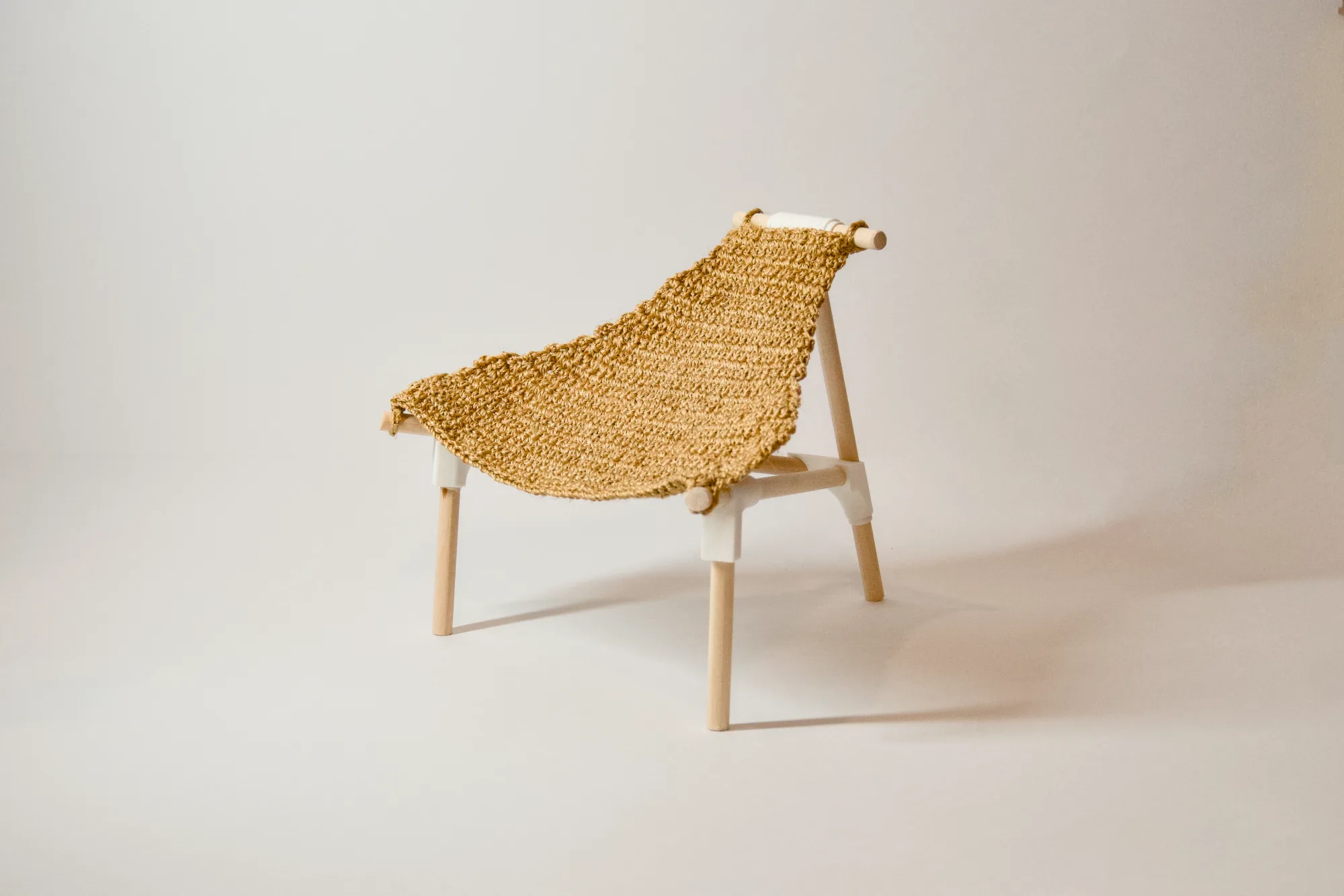
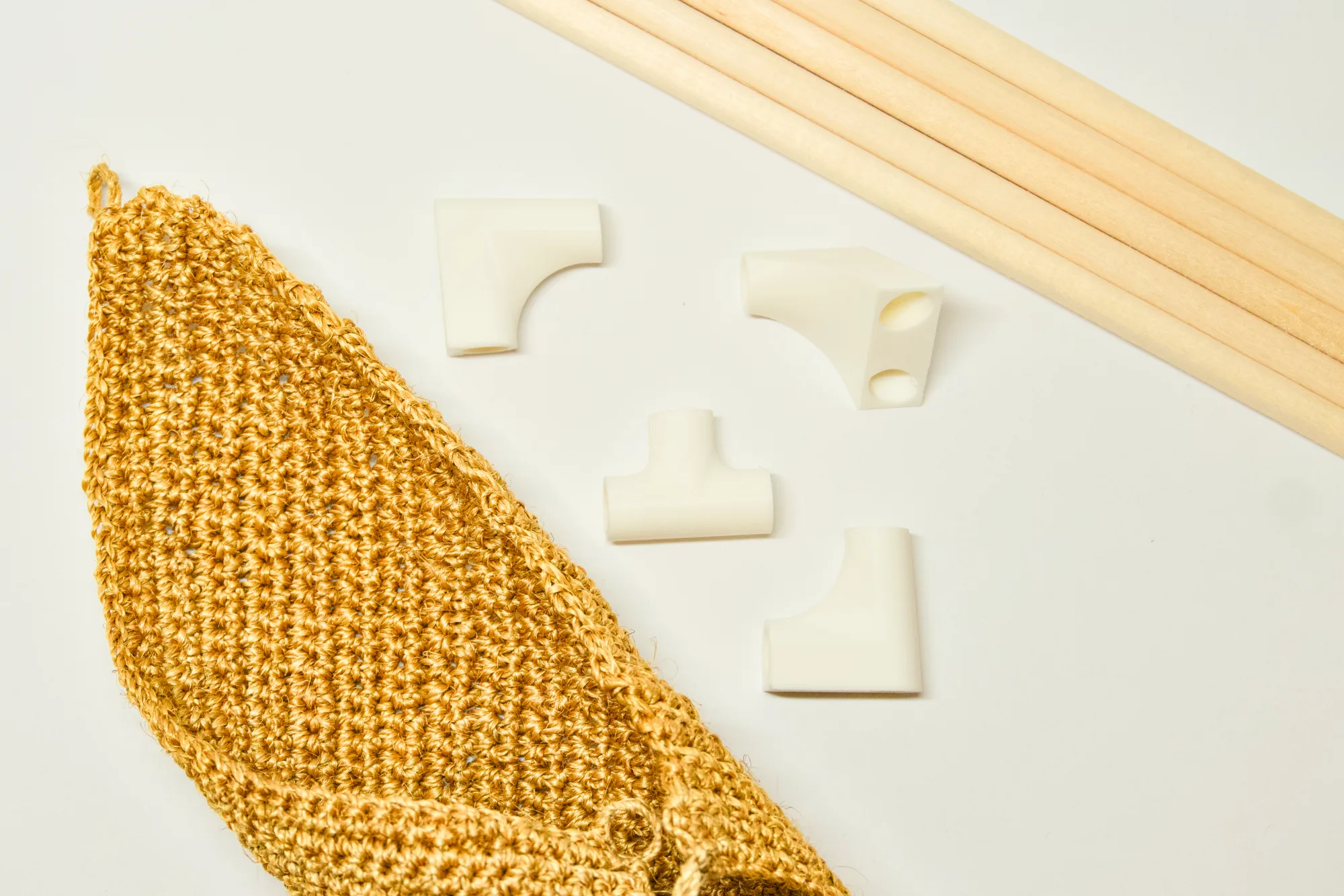
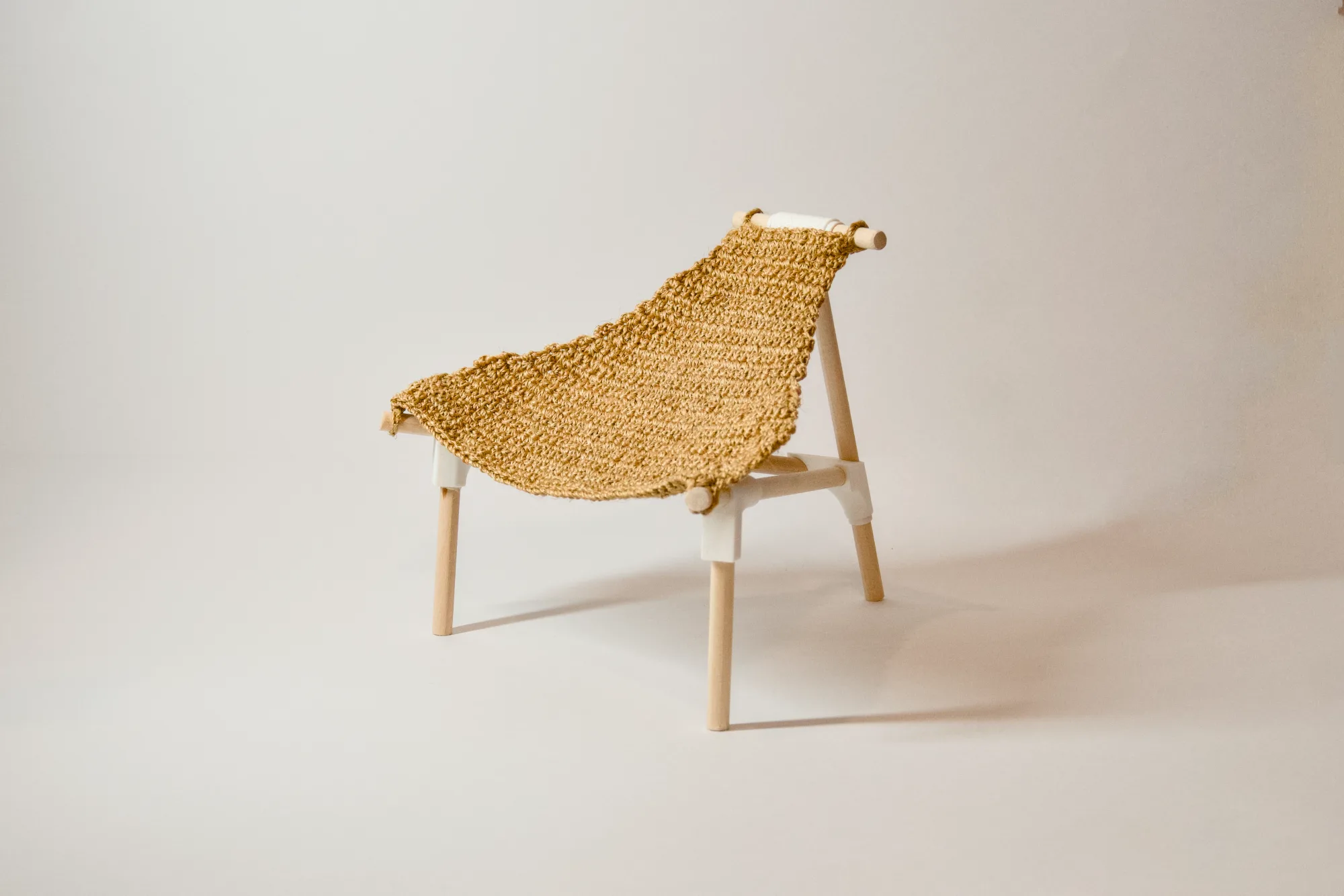
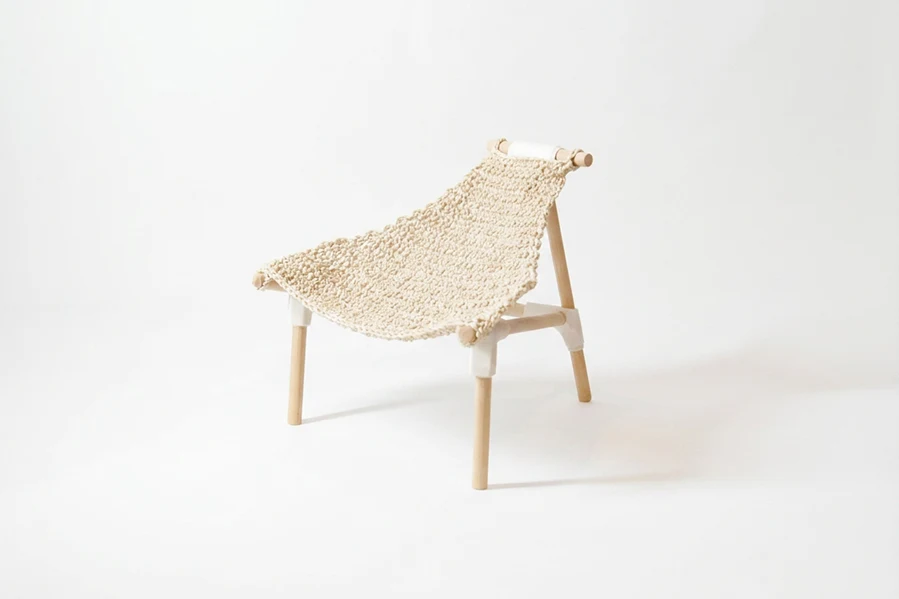
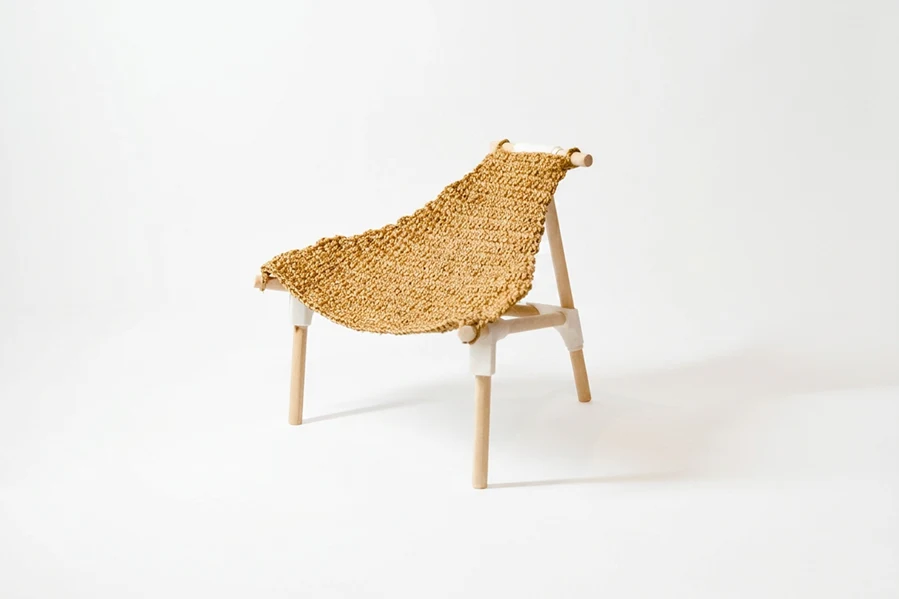
Trama is a lounge chair reduced to three families of components: turned wood rods, injected thermopolymer joints, and a woven surface made from sansevieria fiber. There are eleven parts in total. There are no screws, no adhesives, and no metal fittings.

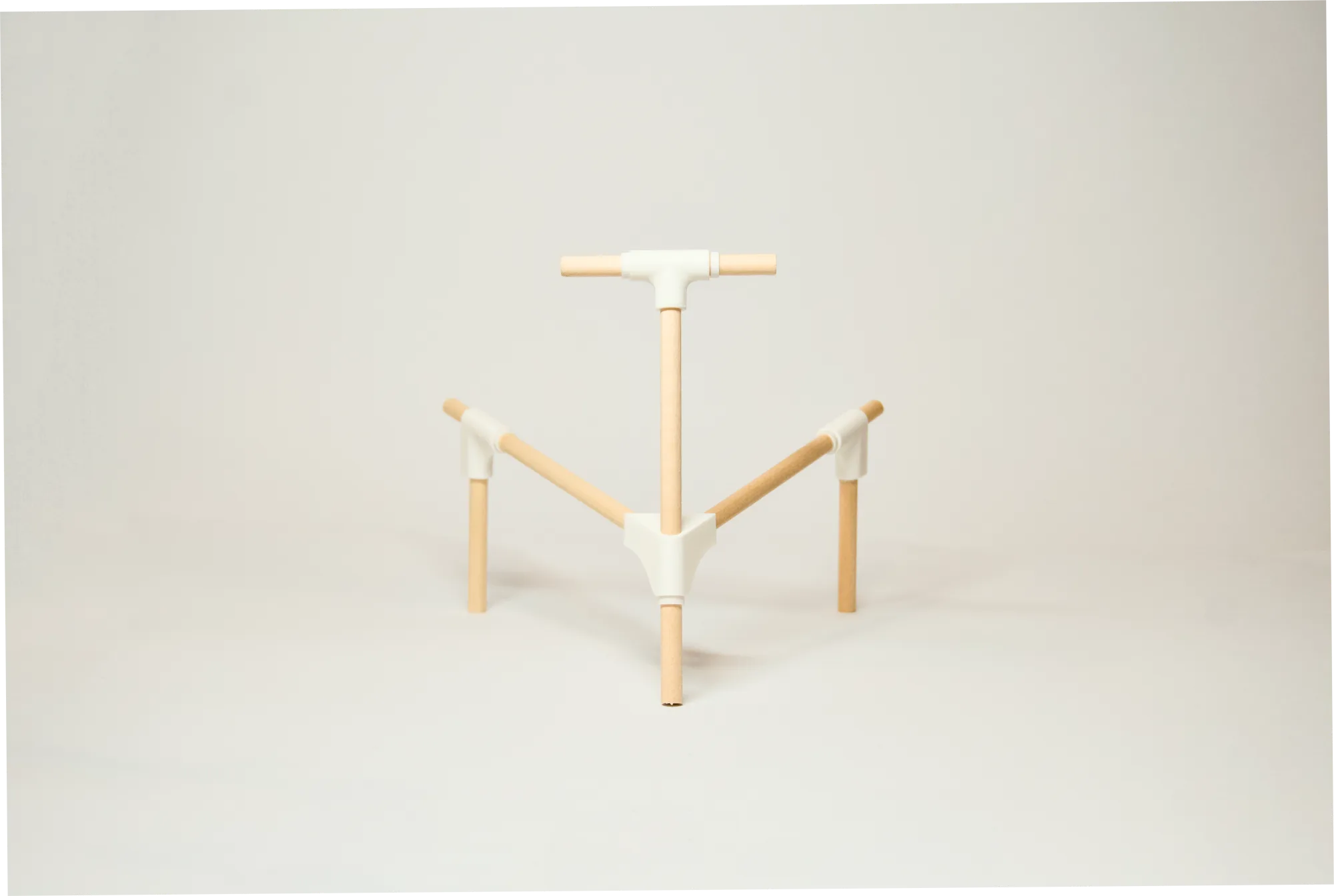
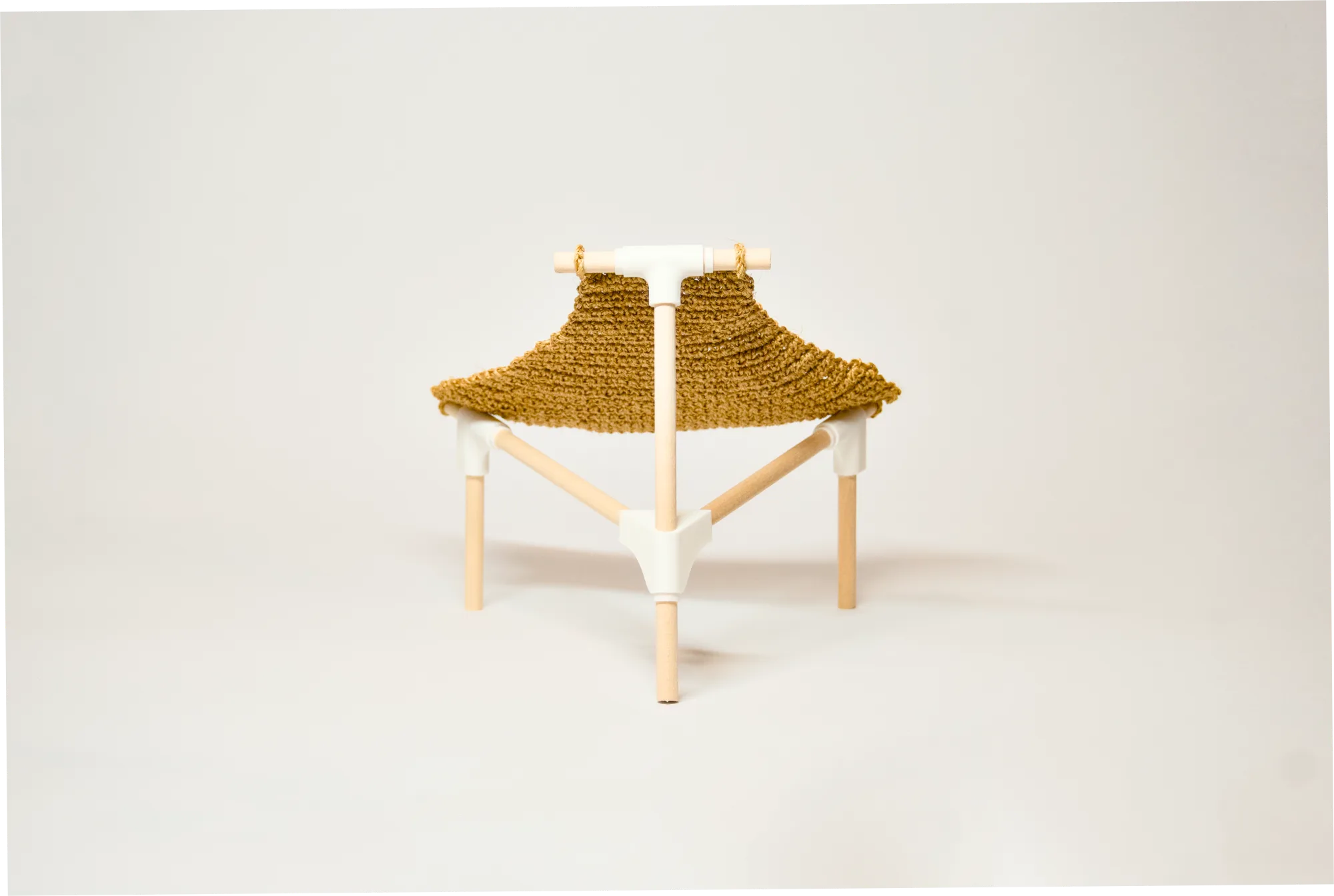
The structure resolves the seat on three ground contact points instead of the four found in a conventional chair. A vertical axis forms a T in elevation, and the base opens into a V in plan. The woven surface spans between the upper nodes and carries the user directly — the same element provides the seat, the backrest, and the suspension.

The project takes its posture from the hammock, an object that in the Yucatan Peninsula is not decoration but daily infrastructure. It takes its material from sansevieria, a regional fiber whose story is developed in the Sustainability section.

The name comes from the Spanish word trama, the weft: the transverse thread that crosses the warp to build cloth. In general use the word also means the underlying structure of something, what holds it up from below. Trama names the chair twice — literally for the woven surface that seats it, and figuratively for the frame and joint system that holds it together.

Key data
Type
Lounge Chair
Context
Andreu World Contest 2026
Manufacturing the future
Components
11 parts — 3 families
Materials
Turned hardwood · BIO thermopolymer · Sansevieria fiber
Fasteners
None
Assembly
Tool-free. No adhesives.
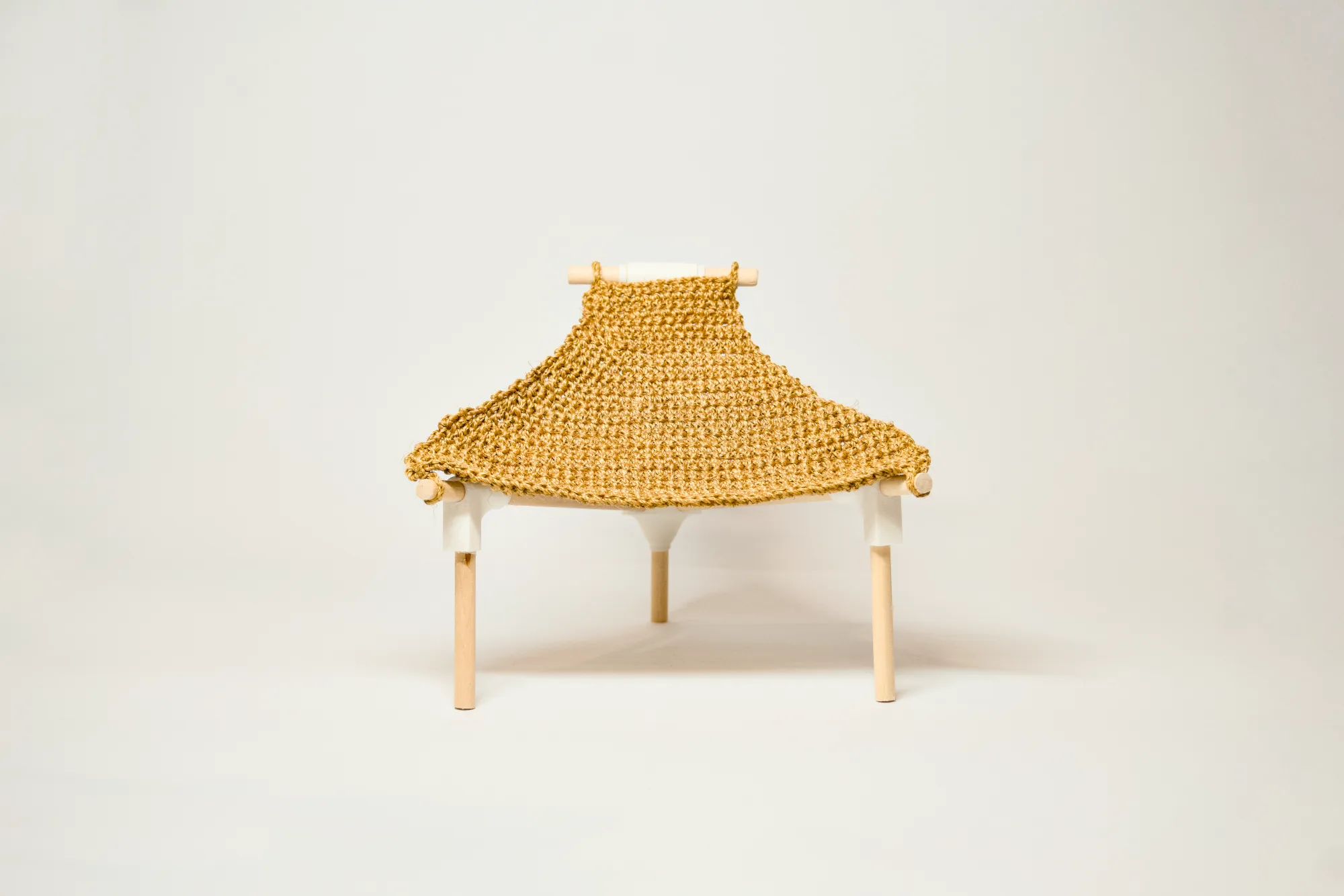
Trama lounge chair — three-quarter view
The project was defined against four objectives, stated before the first sketch and used afterwards as the criteria for every decision. The result is a piece that reads as simple and behaves as a system. Its complexity is in the joints and in the weave, not in the silhouette.
01
Reduce
Reduce the chair to the smallest number of parts that still resolves structure, comfort, and manufacture.
02
Avoid imitation
Use the constructive logic of a chair without reproducing an existing formal language.
03
Regional material
Work with a regional material that carries environmental and economic value beyond the object itself.
04
Open system
Keep the system open, so that dimensions, materials, and surface pattern can change without the concept breaking.
Three families of components — joints, rods, fiber

Three families of components, each made independently, each replaceable without touching the others. The chair is a set of decisions about which parts to have, not a formal composition of shapes.

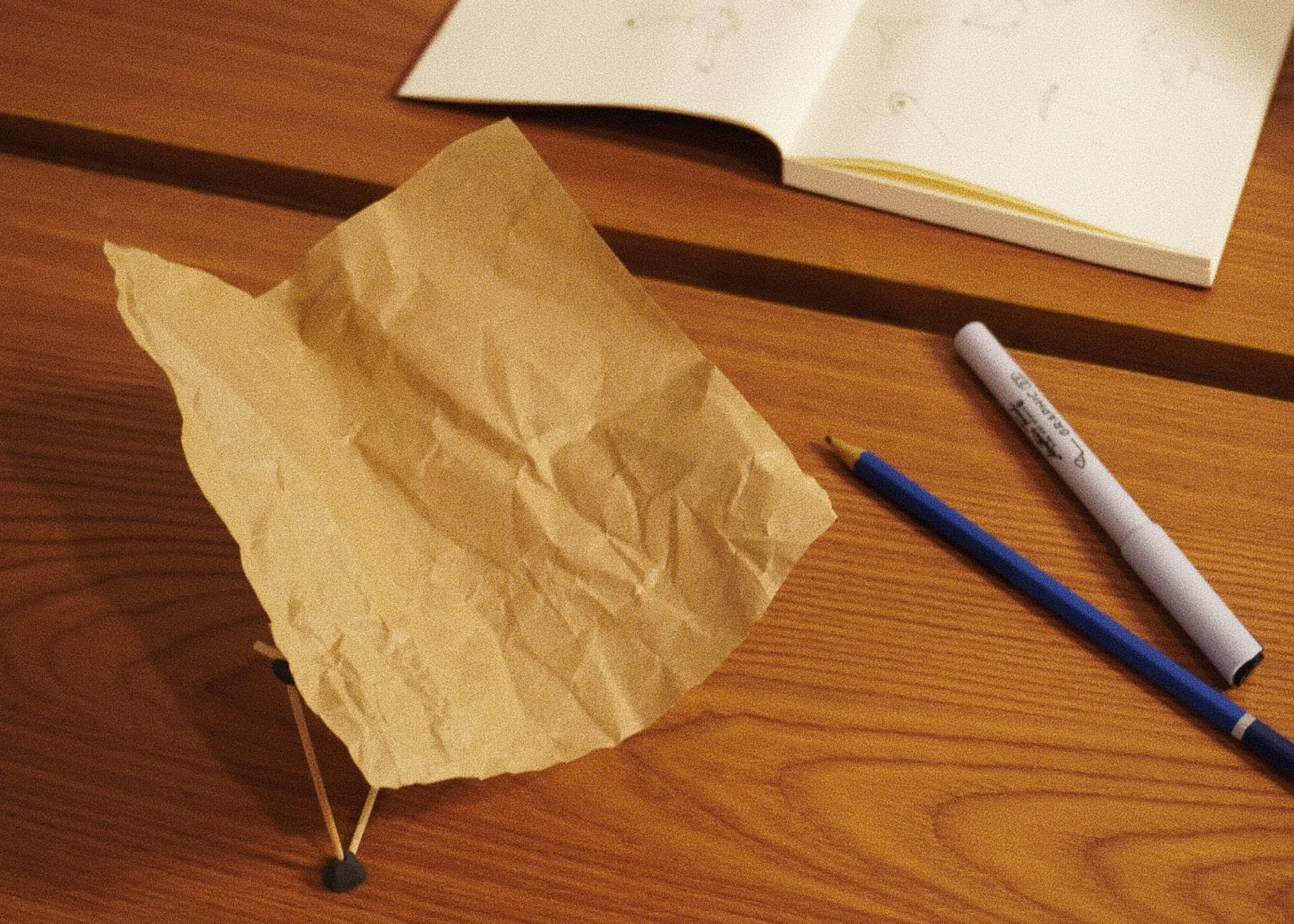
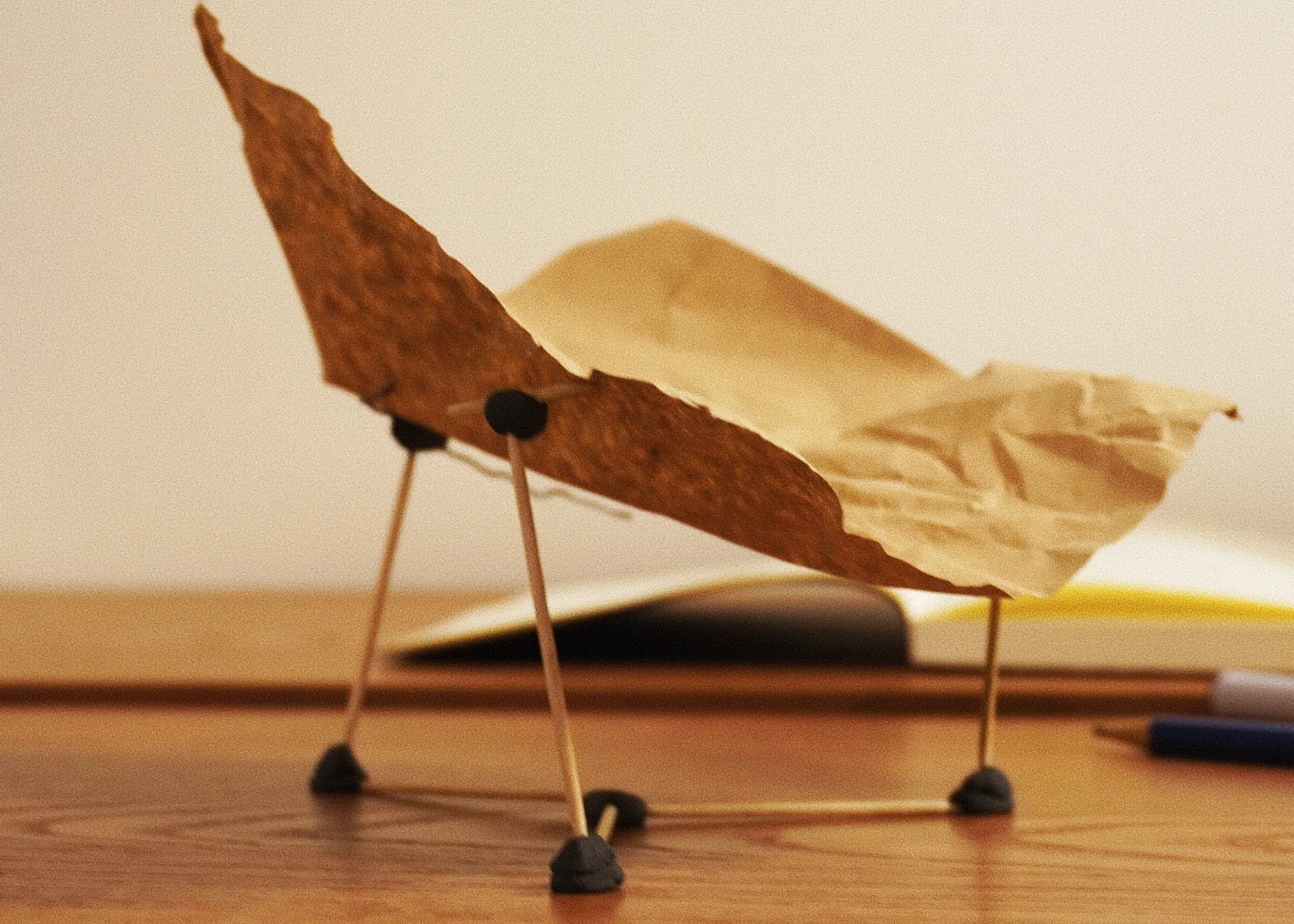
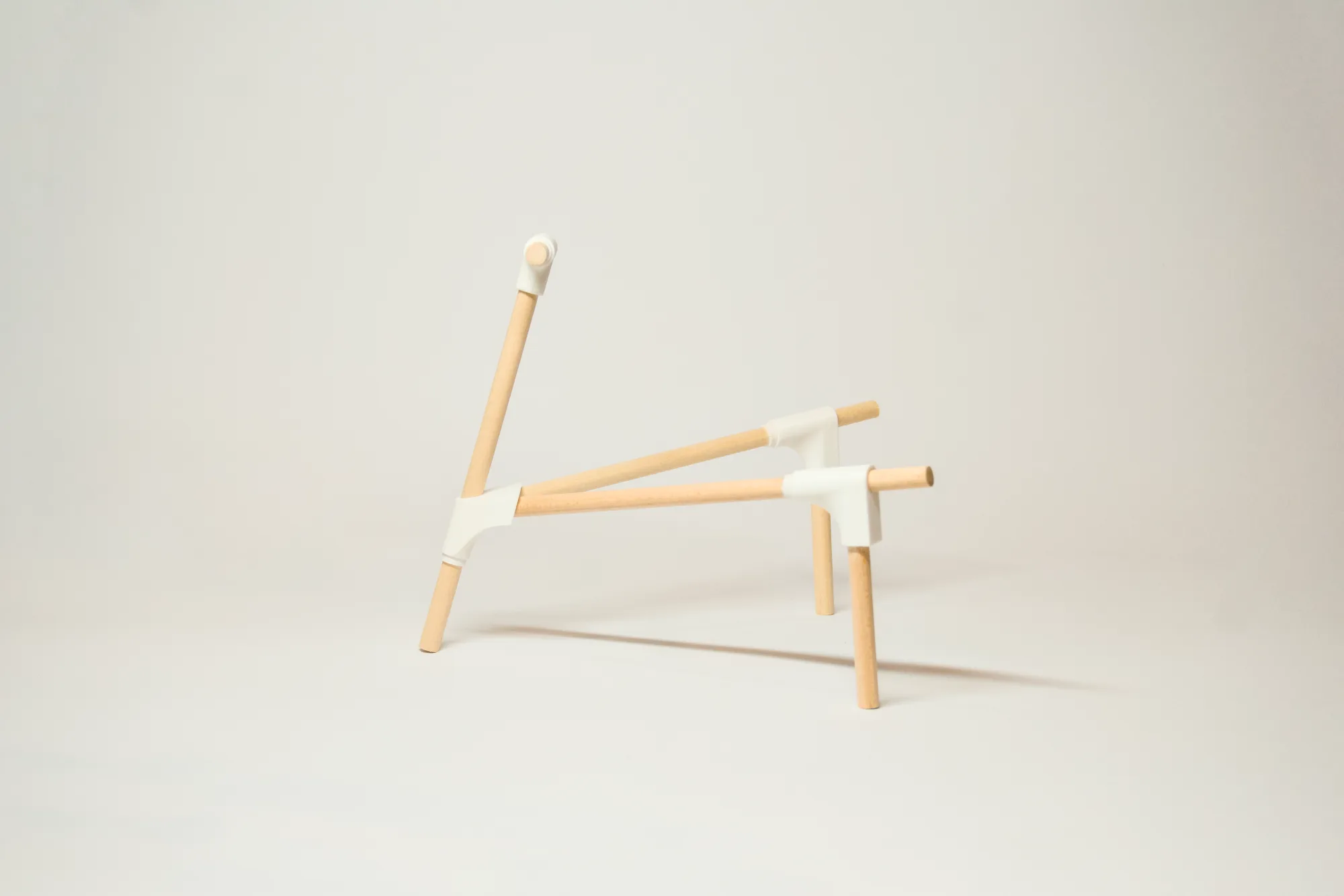
Before committing to dimensions, paper and toothpicks tested the T-plus-V spatial logic at scale — a proxy for the tensioned weave and the tripod frame. It validated that three ground contact points produce stable support without adjustment on any surface.
Early mock-up — paper and toothpick study on the desk
Early mock-up — tripod frame and weave, side profile
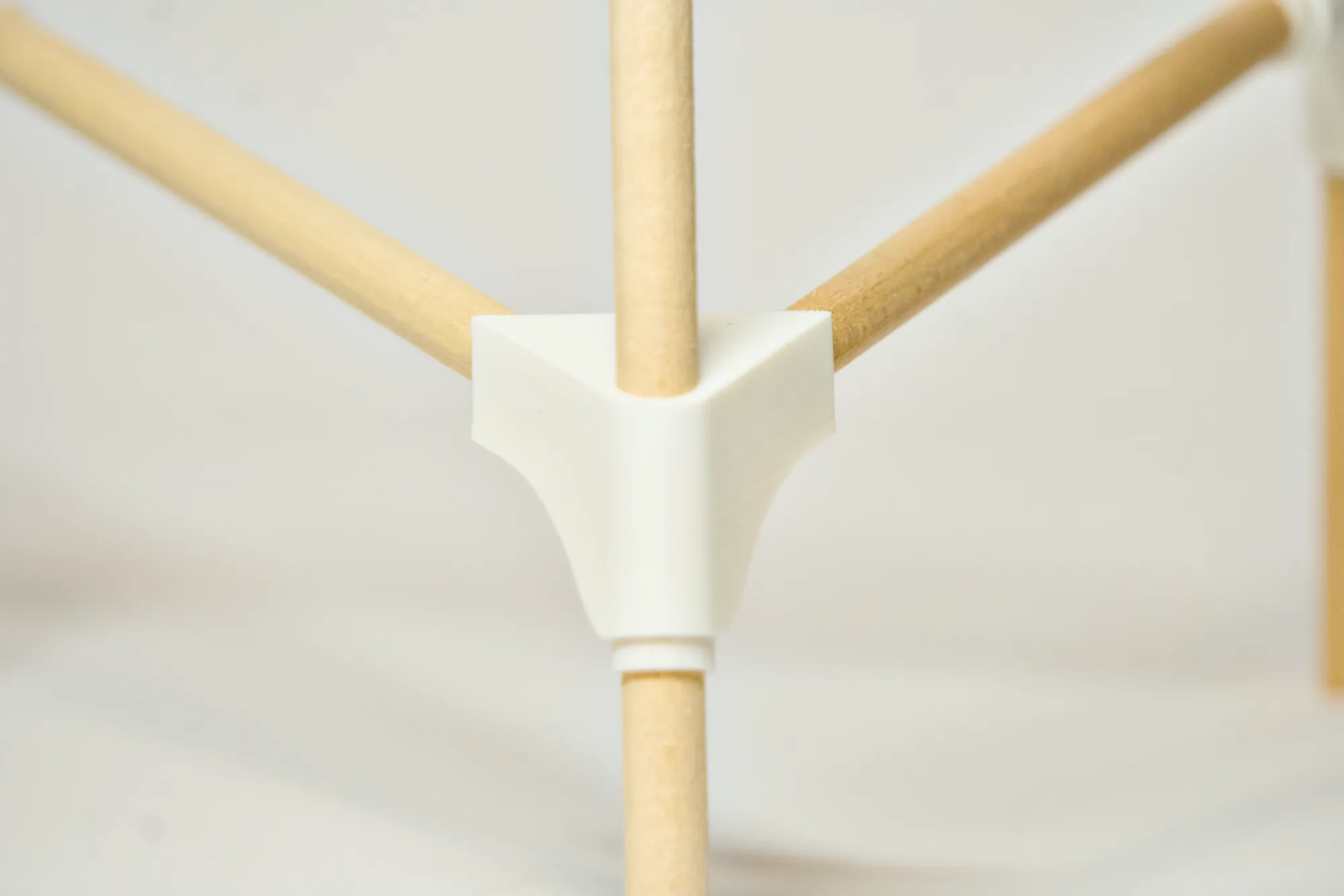
Upper node — V junction detail
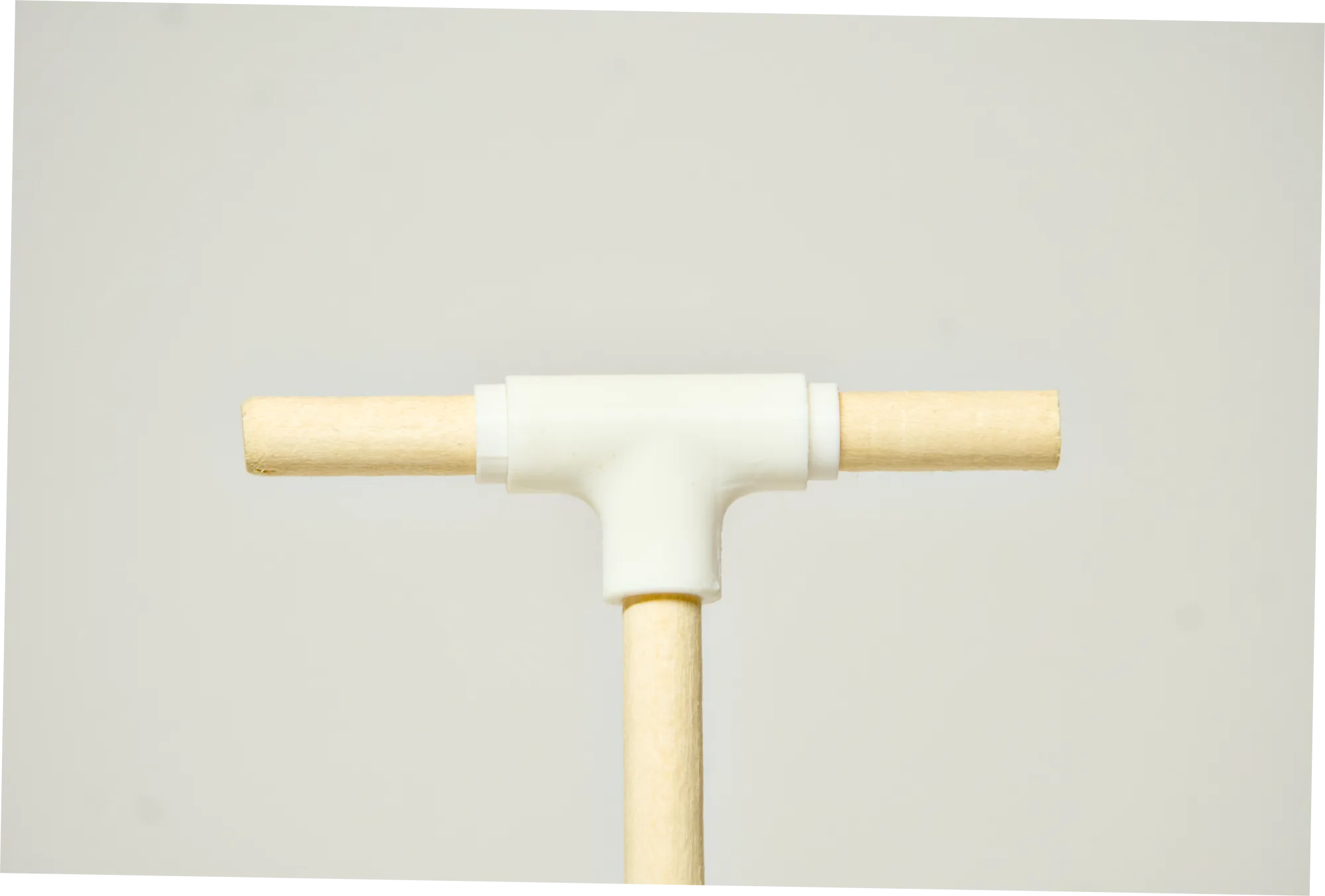
T-node — horizontal cross detail
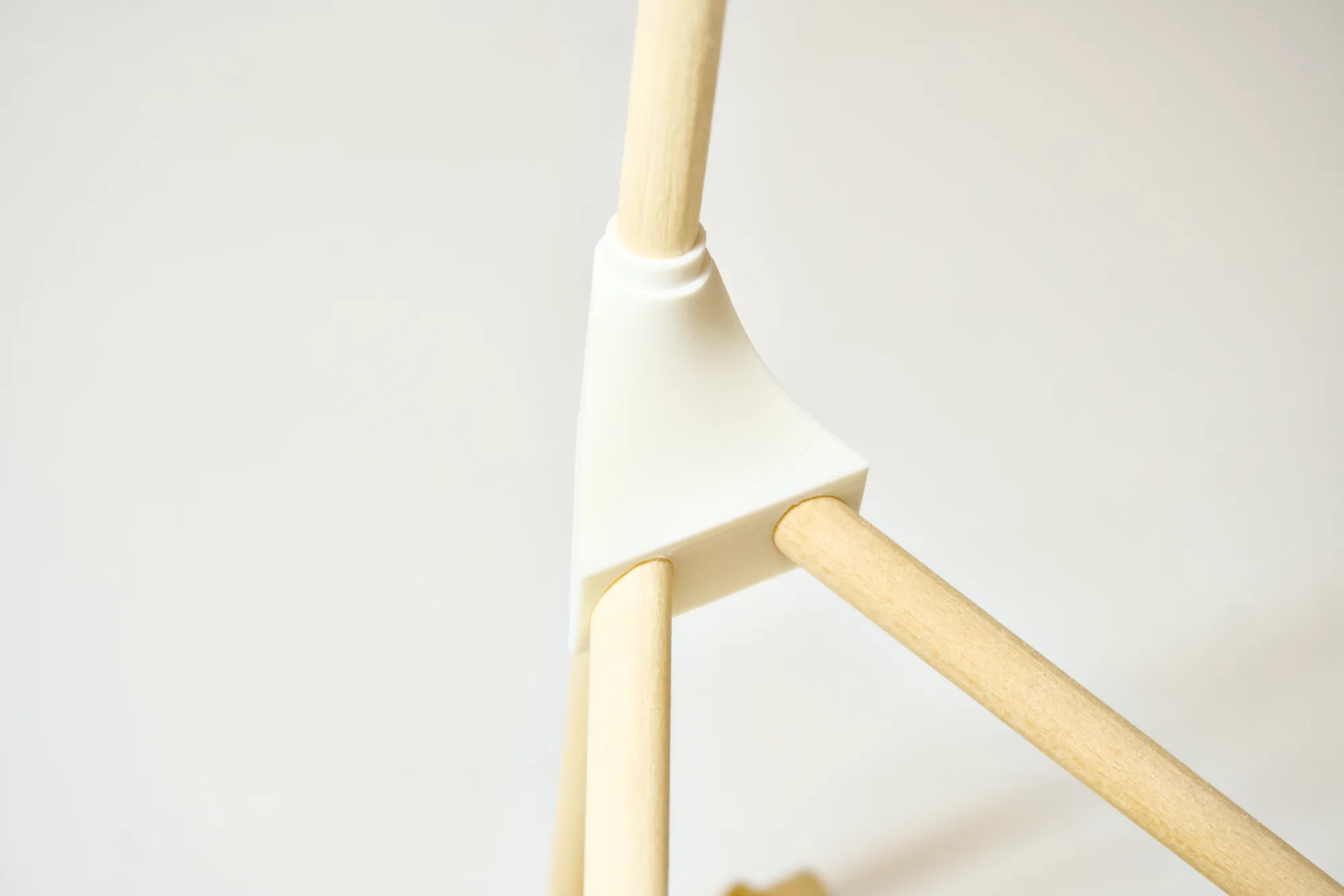
Lower node — tripod base detail
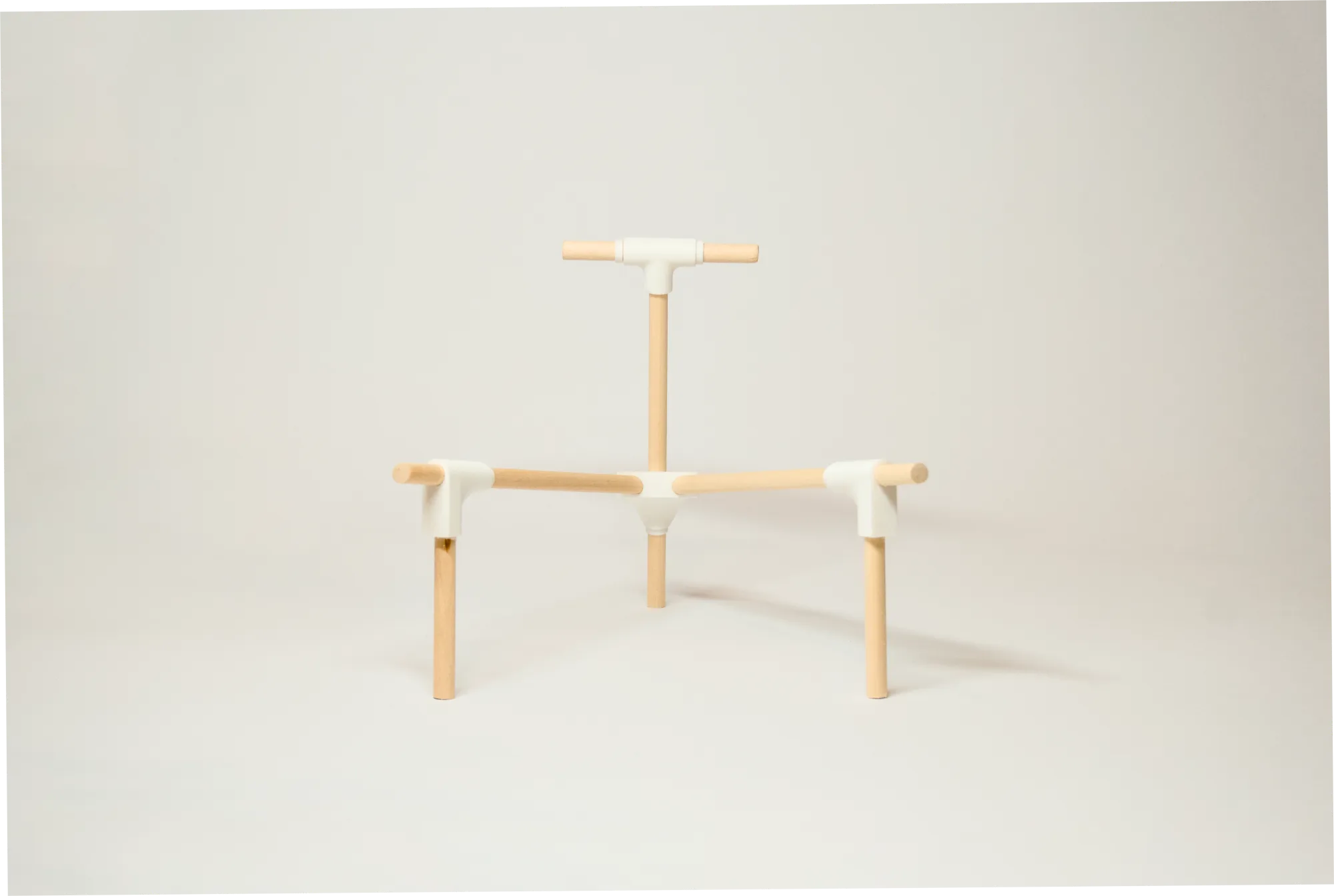
Full structural frame assembled without weave
Structural frame — side profile
Structural frame — front view

The four nodes carry the whole logic of the chair. Each one fixes the angle between the rods it receives, which means the geometry of the chair lives in the tool, not in the assembly. A user cannot assemble the chair incorrectly, because the sockets only accept one configuration.

The nodes are conceived as solid volumes with blind sockets for the rods. For injection moulding, thick solid sections cool unevenly, producing sink marks on visible faces and extending cycle time. Two production routes resolve this: core the interior with internal ribs keeping wall thickness uniform, or use gas assisted injection to hollow thick sections during moulding while maintaining the outer surface.

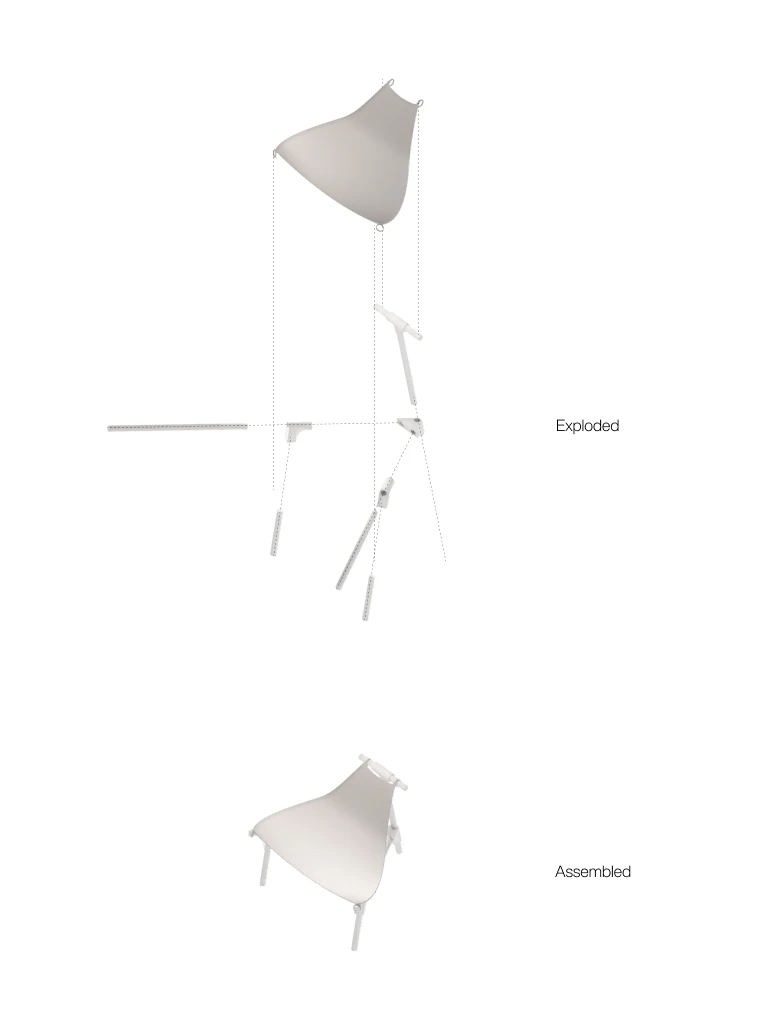
Assembly diagram — exploded and assembled states

Assembly is one sequence: insert the rods into the nodes, then tension the weave over the upper nodes. The weave is the last step and also what locks the frame — tensioning it pulls the upper nodes together and preloads the joints. Disassembly reverses the order, and no tools are needed either way.

Trama ships flat. Six rods lie parallel in a single bundle, four nodes nest in a corner of the pack, and the weave folds to a volume close to that of the rods alone — a fraction of the assembled chair. A flat pack this close to the rod bundle's own volume reduces transport volume and the freight emissions that follow it.

Structural principle

A conventional chair distributes load across four legs. Four points are statically indeterminate on an uneven floor, which is why chairs rock. Three points define a plane, so a tripod is always stable without adjustment.

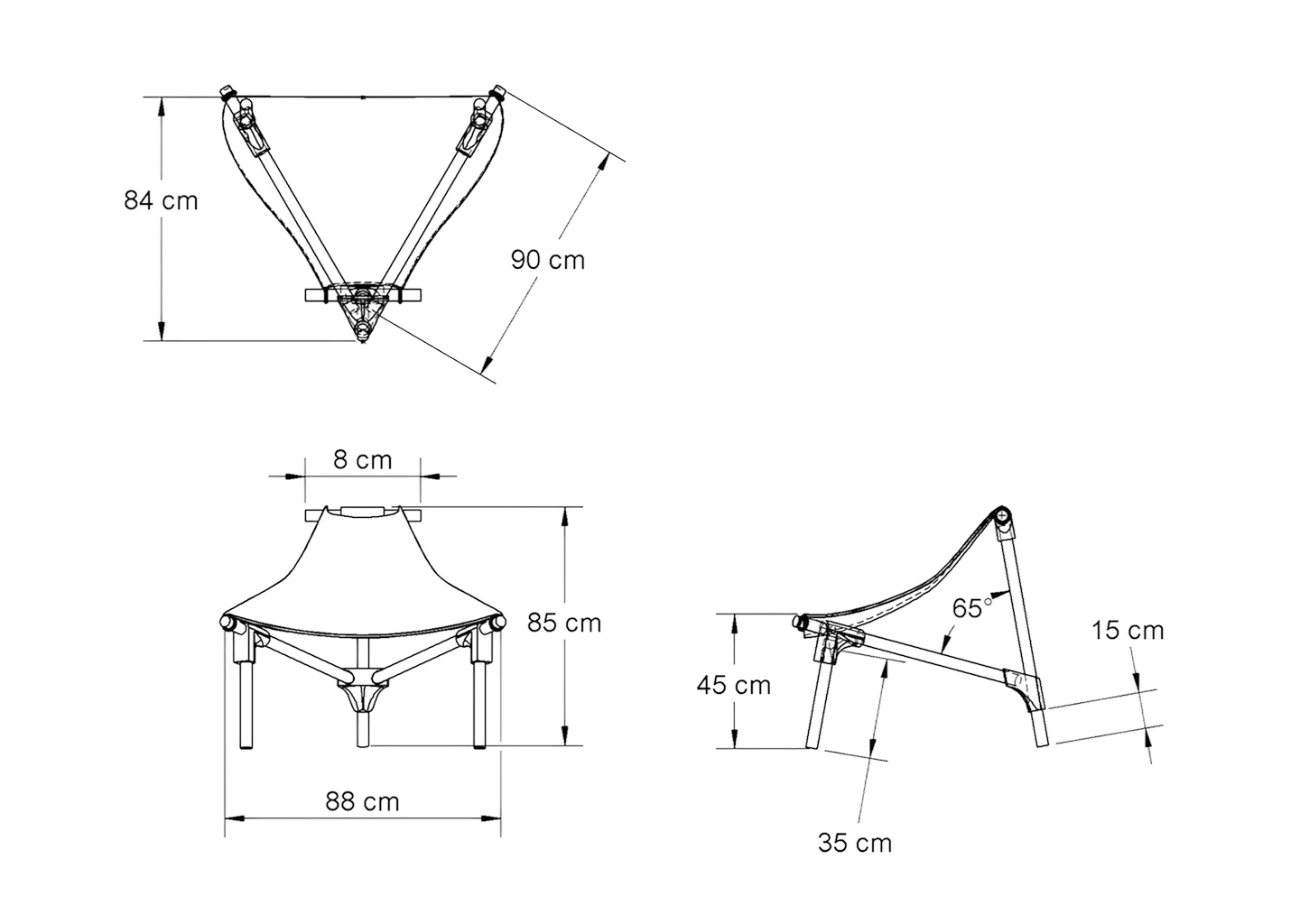
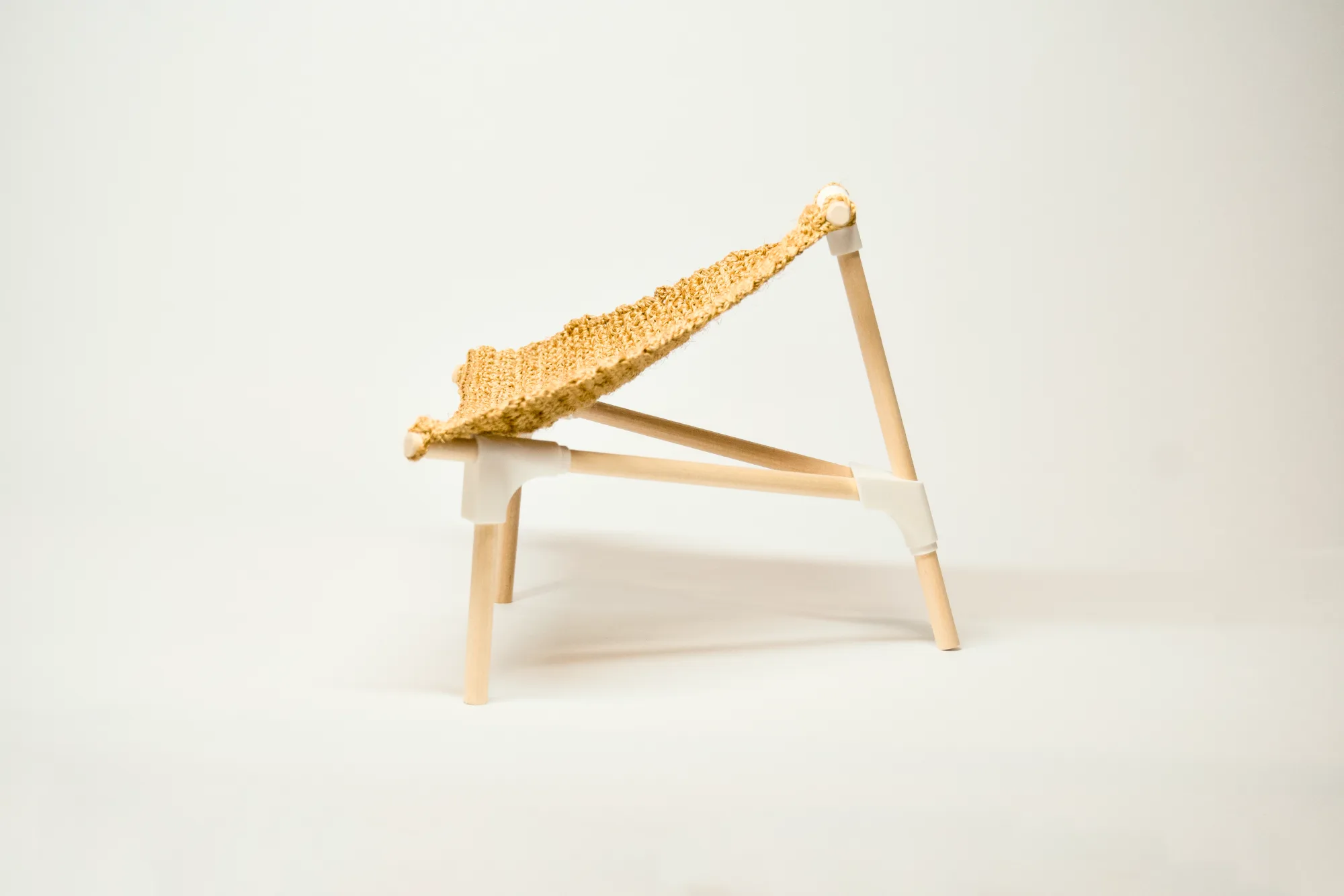
Trama uses three ground contact points. Two front legs and one rear leg form the base. In plan the structure opens as a V with a 90 cm diagonal envelope, giving the piece a wide footprint that resists the overturning moment produced by the reclined backrest. In elevation the vertical axis and the horizontal member cross to form a T, and the backrest continues from that intersection.

Reducing four legs to three removes one part, removes one joint, and removes the need for floor levelling. The saving is not only in material — it is in tolerance.

Technical drawings — plan, elevation, and side views with dimensions
Component breakdown
Component Material Notes
Wood rods Turned hardwood, 40 mm diameter Species is open: any hardwood of adequate density performs, which allows local timber wherever the chair is made. FSC certified stock meets the requirement where certification is called for.
Joints Injection moulded thermopolymer Andreu World BIO thermopolymer. Bio based, biodegradable and compostable at end of life, aligning the nodes with the biodegradability of the wood and fiber.
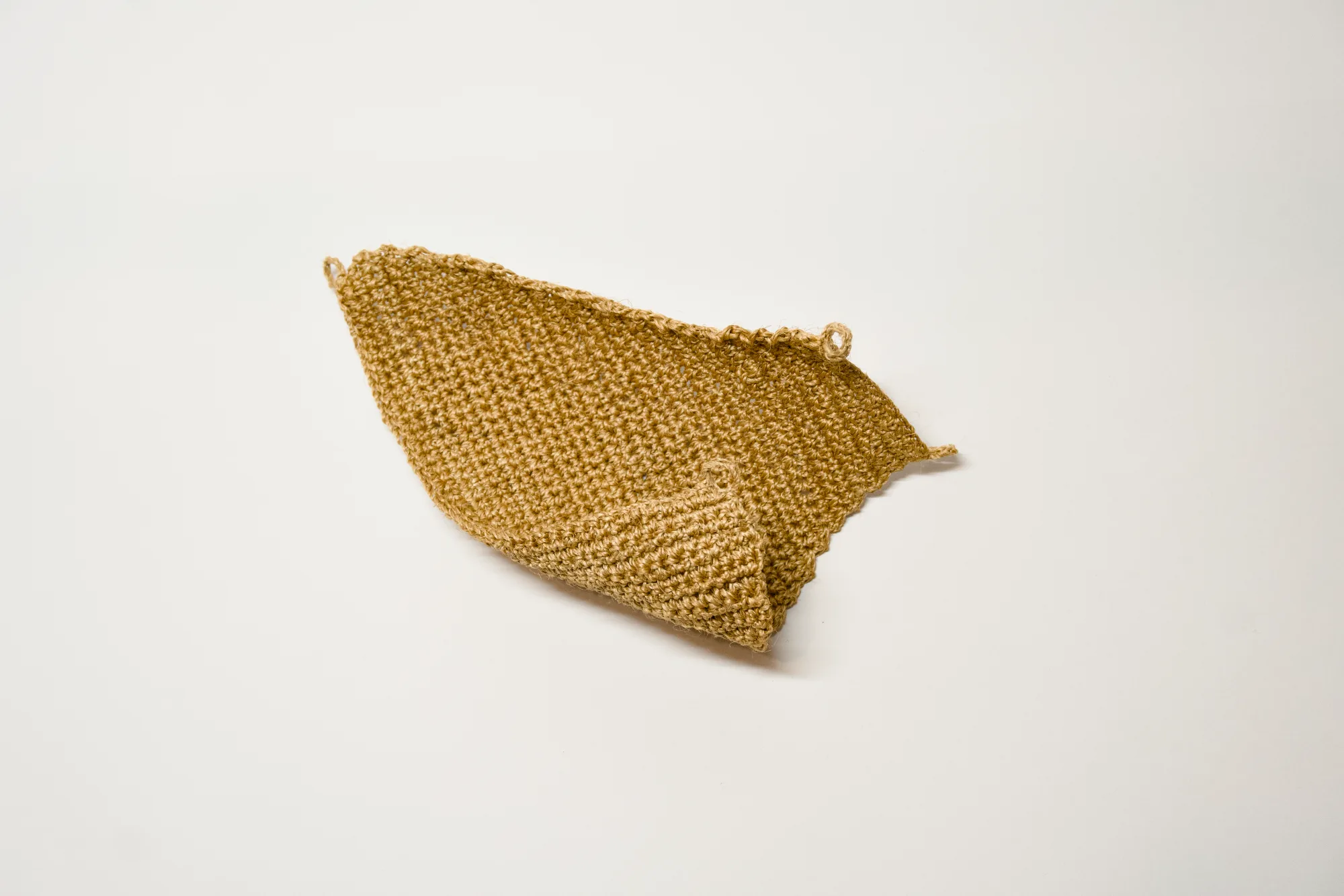
Woven surface Sansevieria bast fiber Spun and woven by hand. The material case is developed in Sustainability and circularity.
Ergonomics

In the Yucatan Peninsula the hammock is a normalised object. Its comfort does not come from padding. It comes from a suspended surface that deforms under load and distributes pressure across the body instead of concentrating it on a few contact points.

Trama translates that behaviour into a fixed frame, set at 65 degrees from the horizontal. The woven surface is tensioned between the upper nodes and hangs slightly under the user — it is this give in the surface, not a hinge in the frame, that lets the seated posture settle and adapt. The chair does not imitate the shape of a hammock. It borrows its principle.

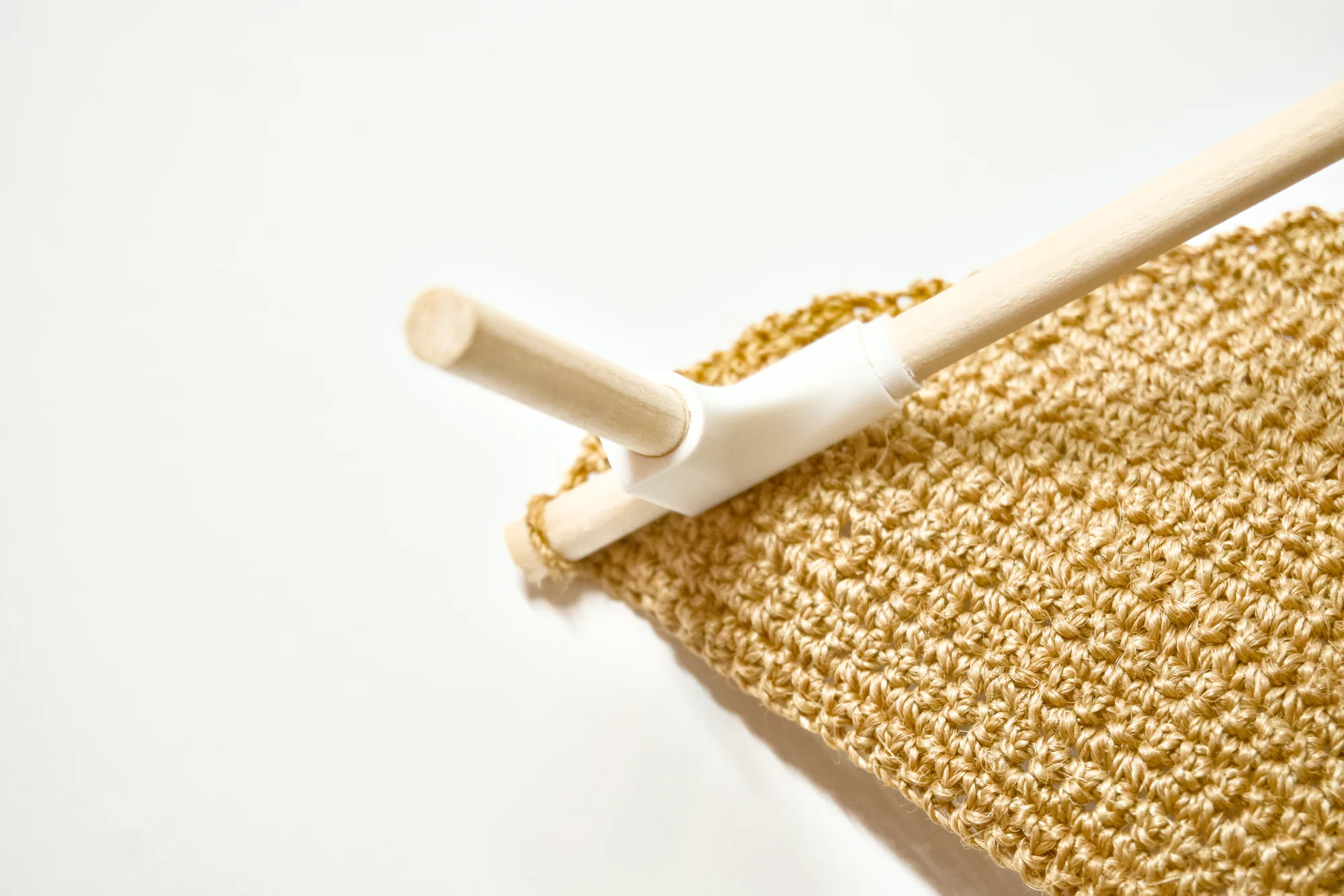
Sansevieria woven surface — texture and construction
Seat height 45 cm. Low enough to signal rest, high enough to allow an unassisted rise.
Frame angle 65°. Fixed, not a recline setting. Posture adapts through the tensioned fiber surface.
Width 88 cm. Generous shoulder clearance, consistent with a lounge typology.
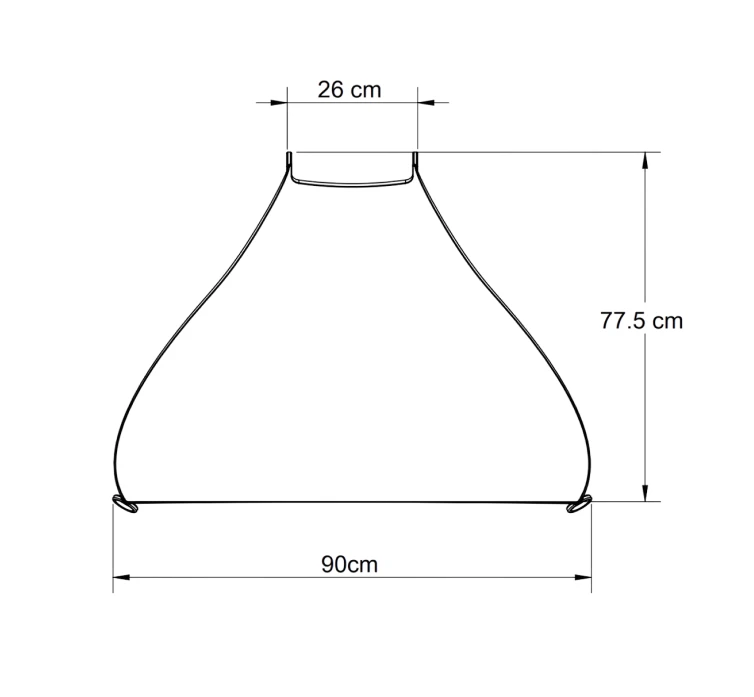
Woven surface — flat pattern
Woven surface — flat pattern dimensions

Sustainability in this project is not a layer applied to a finished object. It is the consequence of the engineering decisions described above, and it can be read at each stage of the life cycle.

Trama's woven surface is sansevieria, a fiber whose extraction runs almost parallel to that of henequen, the agave that once shaped the Yucatan economy. That industry declined, but the knowledge of extraction, cleaning, and spinning did not disappear with it — sansevieria can enter production on land not suited to more intensive crops, using skills and equipment the region already has.

Four properties make it suitable: low water demand and high resistance to disease, which reduces agricultural inputs; rapid propagation, which shortens the cycle between planting and harvest; complete biodegradability with no synthetic content; and a fiber yield per leaf that offsets its modest output per plant.

The absence of adhesives is what carries all of this. The frame is held by socket geometry and by the tension of the weave, so the same sequence that assembles the chair takes it apart. What separates is already sorted: wood to biomass, fiber to compost, nodes to their own stream — with no shredding, no chemical separation, and no residue of one material clinging to another.

Sansevieria fiber — material and weave detail
Life cycle response
Stage Design response
Raw materials Solid wood, thermopolymer with bio based origin, and a rapidly renewable regional fiber with low agricultural input.
Manufacture Straight turned rods with no bending or lamination. Four moulded parts from one family of tools. No adhesives, no coatings, no metal fittings.
Transport Flat pack. Transport volume approaches the volume of the rod bundle, which reduces freight and its associated emissions.
Use Three point stability requires no adjustment. The tensioned weave adapts to the user rather than wearing against a fixed shell.
Repair Every component is individually replaceable. The weave, which is the most exposed element, is also the easiest to renew.
End of life The chair disassembles into three clean material streams with no separation of bonded materials. Wood and fiber are biodegradable. The nodes are recyclable, or compostable if the bio based option is specified.
Trama — front view
Trama — side view
Trama — rear view
Trama lounge chair — studio photography
Trama is proposed as a system rather than a single product. Three variables can change independently without affecting the others: dimension, material, and surface. Because the nodes fix angles and not lengths, one set of tools produces a family of products rather than a single item — shorter rods give a side chair or a stool from the same four moulds.
The version presented uses yarn dyed with Maclura tinctoria, known regionally as palo de mora, which produces the clear yellow and golden tones seen here. The undyed version is equally valid — sansevieria's natural tone is pale and slightly variable, and skipping the dye removes an entire processing stage with its water and energy cost.
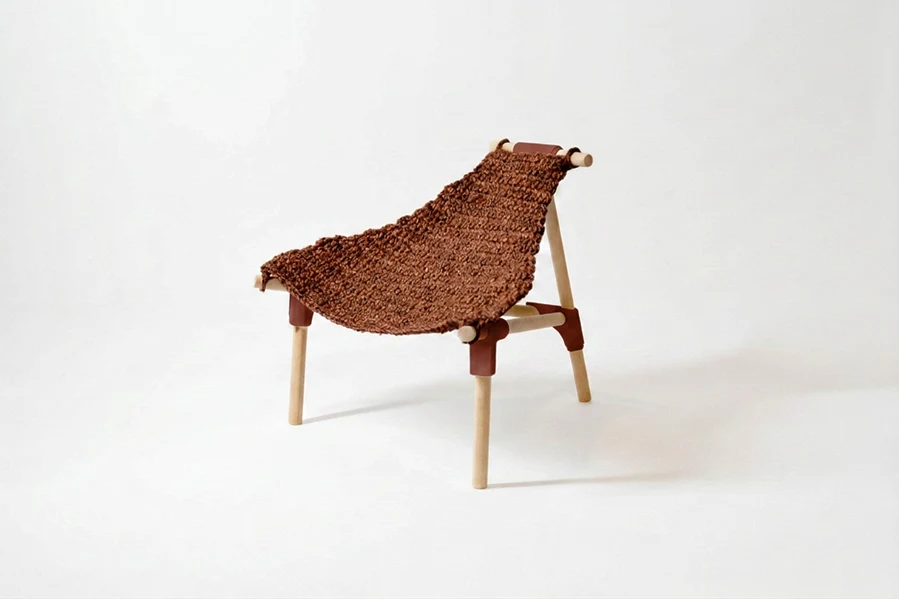
Variant — terracotta fiber
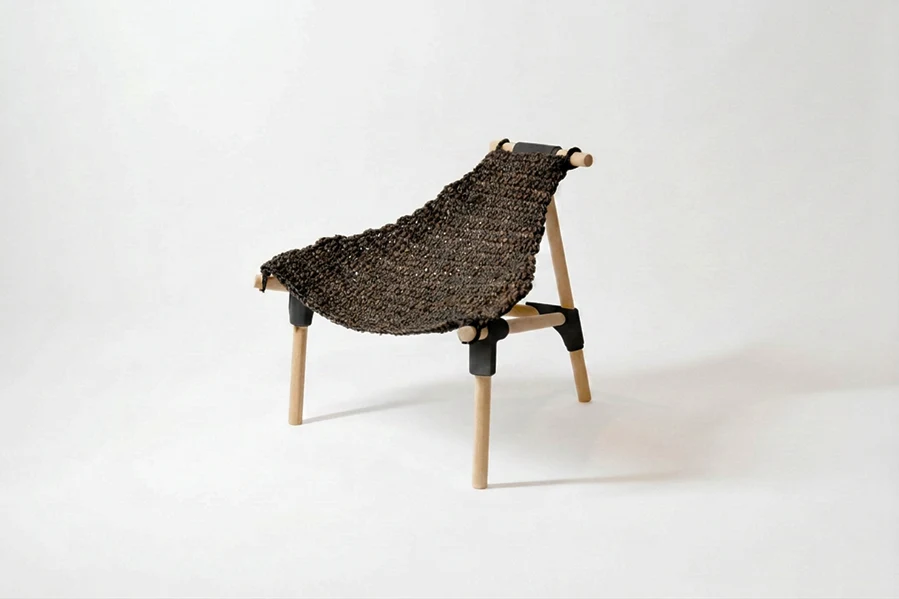
Variant — dark fiber
Variant — natural undyed
Variant — golden dyed
Overall width 88 cm
Overall height 84 cm
Diagonal footprint 90 cm
Seat depth 35 cm
Seat height 45 cm
Backrest angle 65° from horizontal
Rod diameter 40 mm — turned hardwood, uniform across all six rods
Total components 11 — 6 wood rods, 4 nodes, 1 woven surface
Fasteners None
Assembly tools None required
Node material Andreu World BIO thermopolymer
Surface material Sansevieria bast fiber — hand spun and woven
Contest Andreu World 2026 / Manufacturing the future